Matching Tracksuits

fun in fours

learning

A Little Adventure

The Boy's girlfriend informed him that her dad let her drive the car (with him in it, of course) from their neighborhood's clubhouse to their home.

"When can I go driving?" he pestered me. "After all, I'm the one who's obsessed with cars. R doesn't even care about cars, and she's already gotten to drive!"
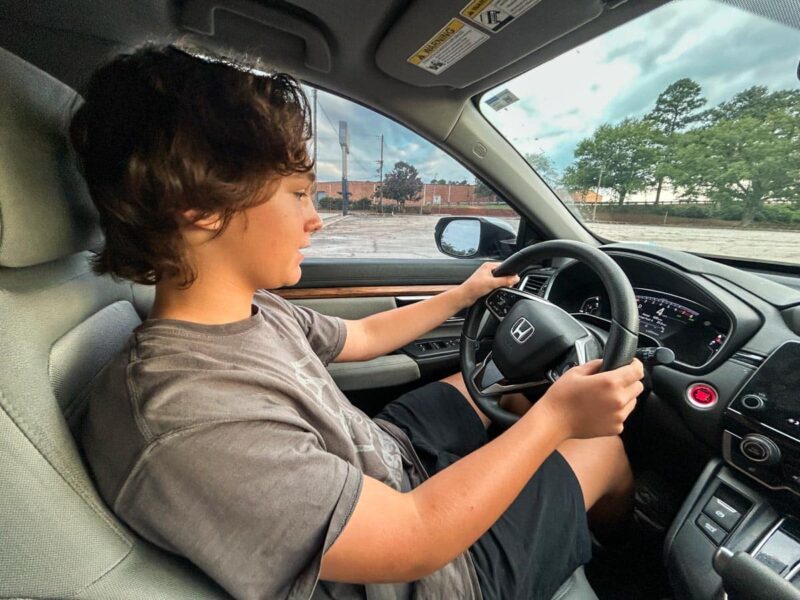
So this evening, we went to an enormous abandoned (virtually) building's equally enormous parking lot to give him a chance to drive. He never applied the accelerator: it was nerve wracking enough just letting the car pull us along -- a surprise to the Boy.

His verdict: "This is better than any video game!"
Lessons and Blooms

"I need to work on my Polish," the Boy recently declared, so he and K have been working on Polish lessons again. He doesn't look enthusiastic all the time, but he is (still) willing.

Almost as lovely as his effort were the azaleas blooming this morning.

Curriculum Night

Tonight, I took the Boy to curriculum night at his zoned middle school. We're still not sure if he's going to the charter middle school L attended (he's grandfathered in) or if he's going to the zoned public school. Right now he's leaning toward the latter: he's interested in music, and he wants to play in band, which is not something the charter school offers.

We spoke to the band director for a while, talked to the strings teacher, looked at the instruments, talked about the advantages of each.

"I think I'm leaning to this school," he said.

"My only concern," I said, "is that the academics at this school won't be at quite the level as the charter school."

The Boy expressed that he's okay with that, suggesting once again that he's not such a smart guy as someone who needs those "high-level classes."

K and I don't know where this idea comes from. He gets great grades; he scores well on standardized tests -- he just doesn't see himself as a gifted person, certainly not as a thinker. He sees himself as perfectly academically average.

He couldn't be more different than his sister...

Code

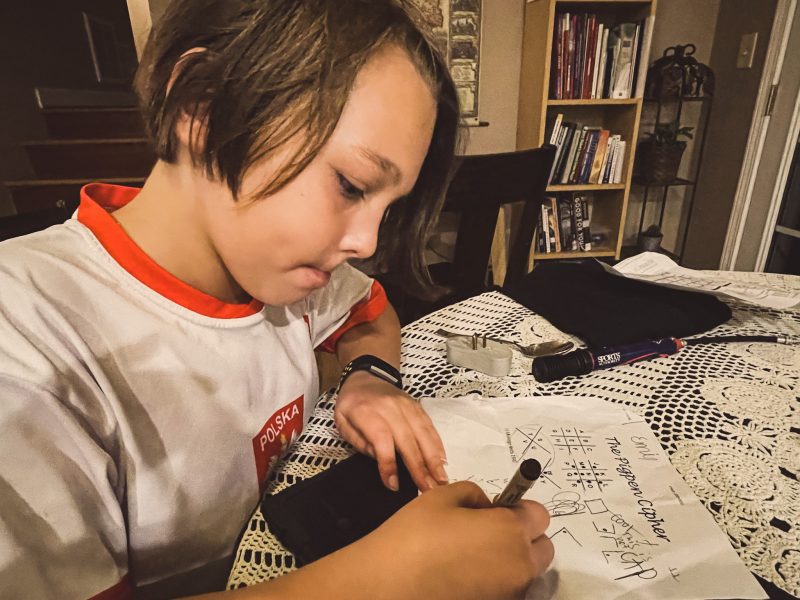
The Boy has become interested in ciphers and codes. They learned about them in school this week and so he wants to learn about more of them. Tonight, he and I were writing things back and forth in pig pen cipher:

upload.wikimedia.org/wikipedia/commons/thumb/3/...

It’s a simple replacement cipher, but the Boy loves it.

During our evening walk, I mentioned to him that Papa knew a real code: Morse Code.

Really?!”

I thought Papa had mentioned that so many times, doing his “da-dit-dit” routine to spell various words out in code, that no one could have forgotten about that. Apparently, E had.

“I wish Papa was still here.”

We’ll be having those moments for some time to come, I think.

Birthday Present

He's been begging for it for ages now.

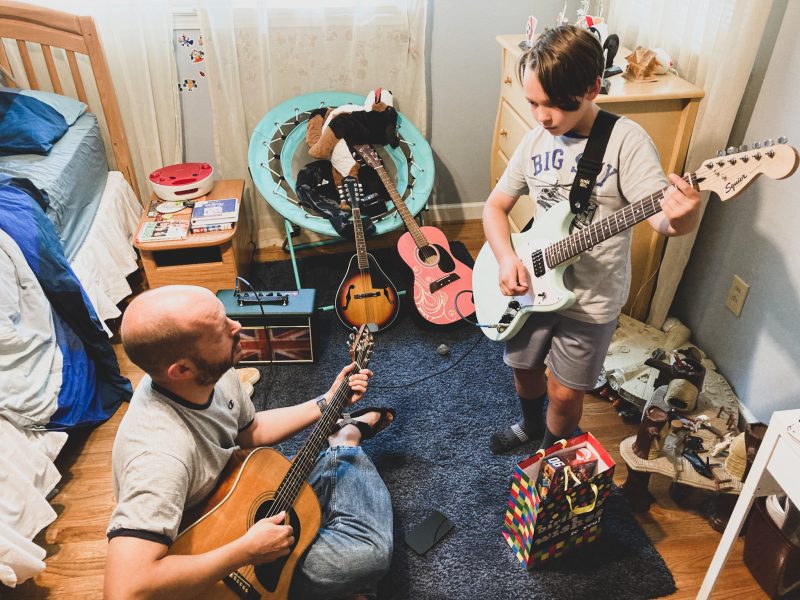
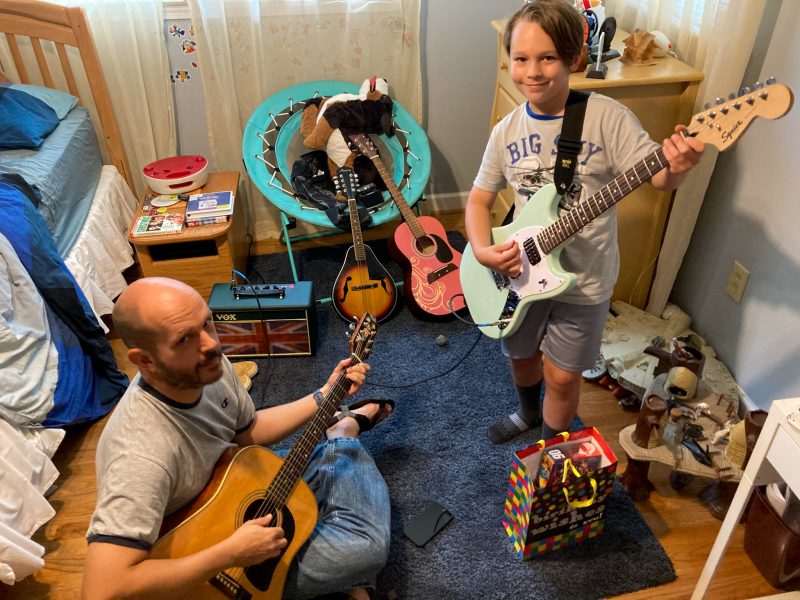
"I really want an electric guitar!" became the Boy'smantra. Yet we were afraid that, like so many other interests, it might just fade away, so we told him to use L's old pink guitar to show that he's really interested in playing, committed to playing, disciplined enough for playing.

I'm not entirely sure he proved all those things, but he made a valiant effort. He learned a few chords (really mastering a couple of them) and got to where he could switch back and forth between them. He practiced chromatic scales to get single-string control along with finger sequencing. And he talked about it a lot.

Of course, he had a point: an electric guitar, with its lighter gauge strings, is easier to play than a steel-string acoustic. A nylon-string acoustic/classical guitar would be the easiest and the gentlest on his fingers, but he wanted an electric guitar. Passion is important, and he was passionate about this, and we want him to keep that passion.

Catching Up

The Boy is often playing catchup with his school work. I've often brought it up here. We're both tired of it -- K, too. Recently, we made a deal with the Boy. Well, not so much a deal as a threat. A hostage situation. No electronics of any kind until he is all caught up. No TV in the morning with breakfast. No YouTube on the weekends. No Minecraft. Nothing. And so he has really buckled down and began doing the work.

Most of it -- on his Chromebook...

Chess with the Boy

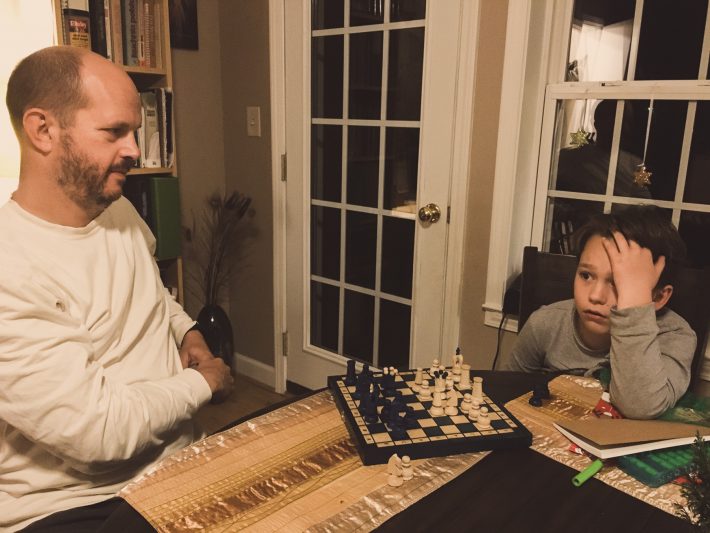
He’s improving. He’s thinking in terms of potential. He’s looking at my last move and giving it consideration.

Tonight, he moved his rook to the semi-open file — always a good development strategy in the opening 8-15 moves.

“Why’d you do that?” I asked.

“So I could attack that,” he replied matter-of-factly, pointing at one of my pawns.

“How many defenders does it have?”

“Three.”

“How many attackers?” I enquired further.

“Two.”

“Is it safe to take?”

“Nope.”

I looked over at K. “He’s going to be able to beat you sooner than later,” I said.

“I’m sure,” she smiled.

Then his tummy started hurting — but that’s a different story.

Treble Clef

Today the Boy had music for his related art class in school. They're working on the treble clef.

"I took the after-lesson quiz," he explained, "and I got 3 out of 20 right! I took it again and only got 4 out of 20 correct!" His frustration was mounting to the level I'm sure it achieved when he was struggling with the material in class.

Checking school lunch. "Daddy, this is what I'm having tomorrow! It's delicious!"

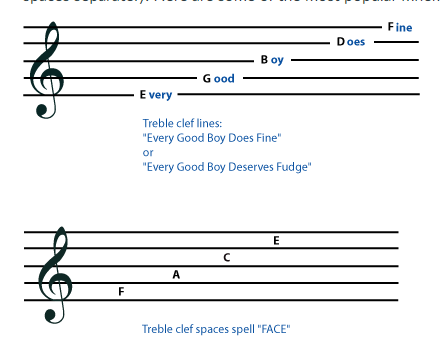
After dinner, I printed out the old methods of memorizing the treble clef: "Every Good Boy Deserves Fudge" and "FACE."

We went through his work together, and he made a perfect score. "That was easy," he decided.

He noticed, though, that there are two D notes on the treble clef: one just beside middle C, and one almost up at the top of the clef.

"Two Ds?!"

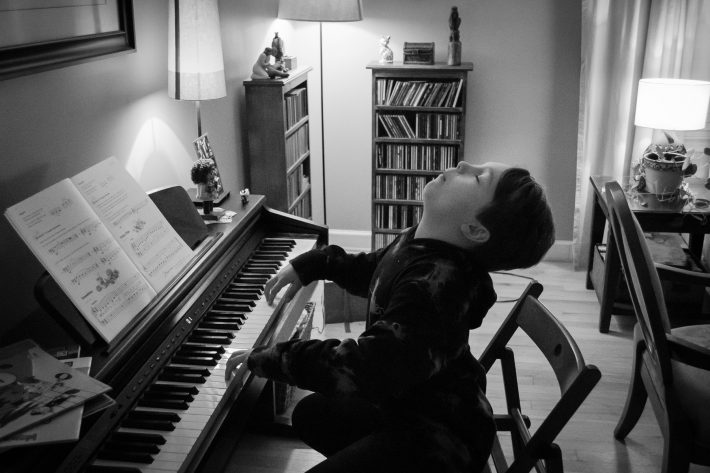
So we went to the piano and started poking around. We talked about the patterns of the black keys and used that as a way to show which keys corresponded to which note.

"This is D," I said. "See how it's between the two black keys? Now show me another D."

Flint and Steel

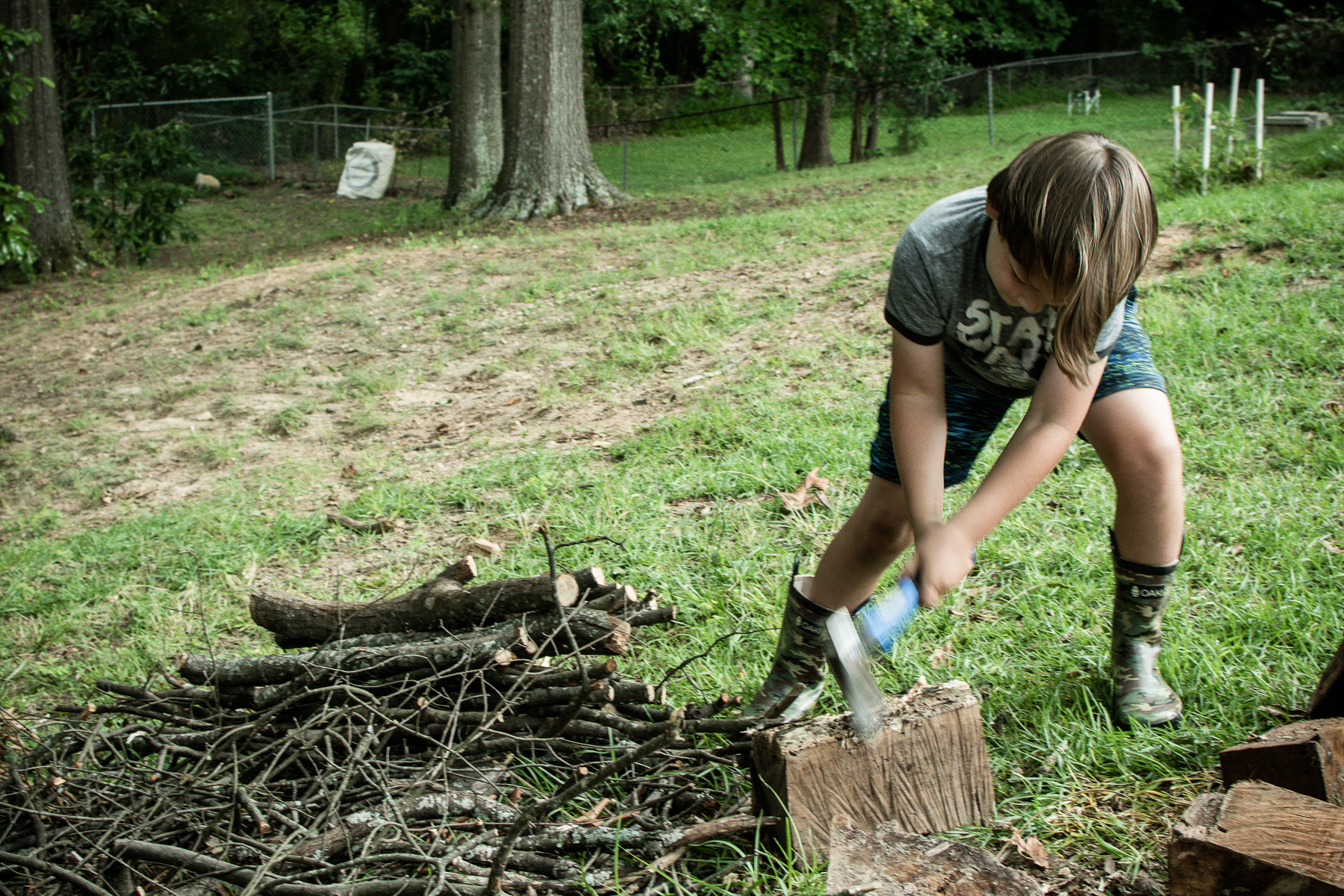
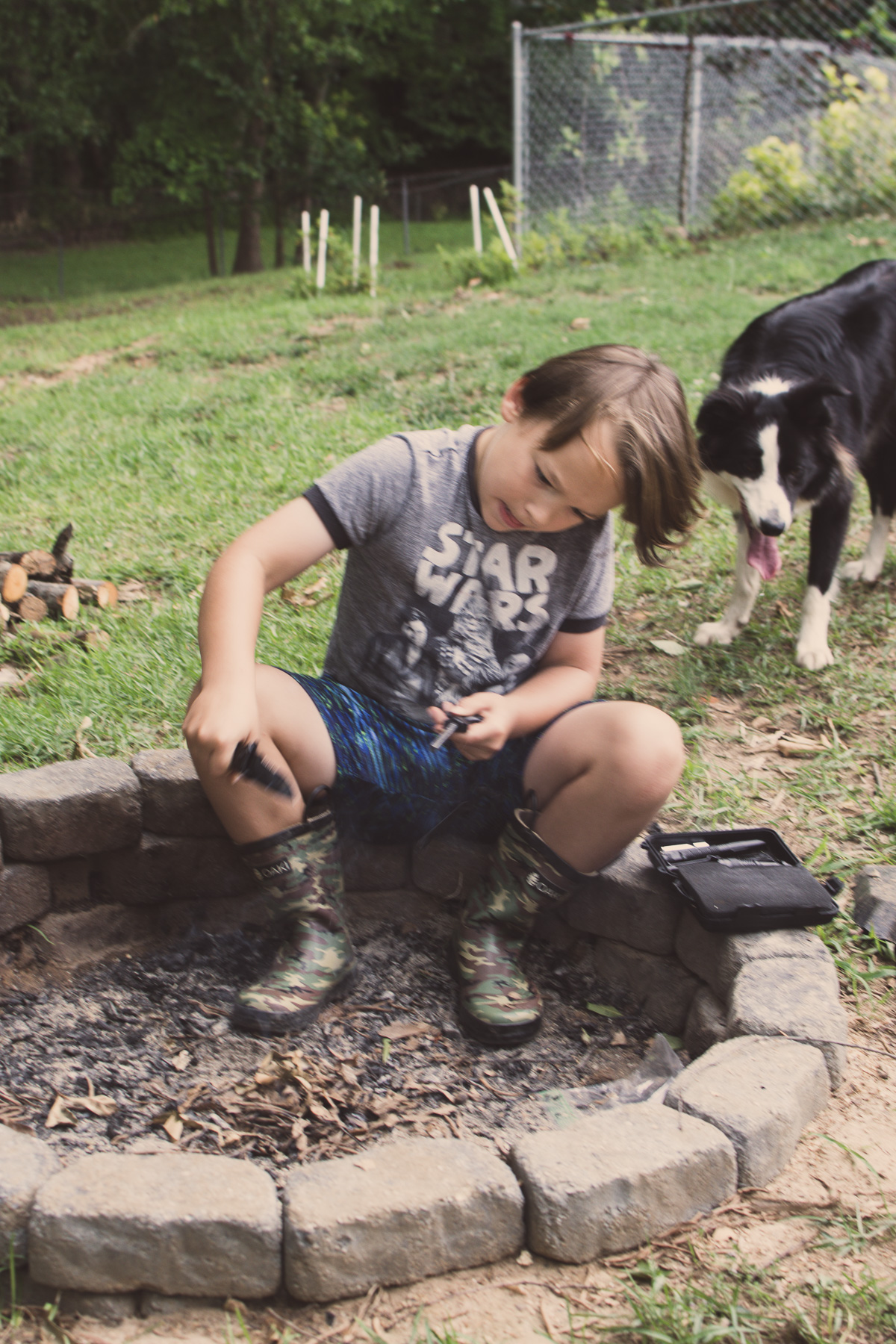
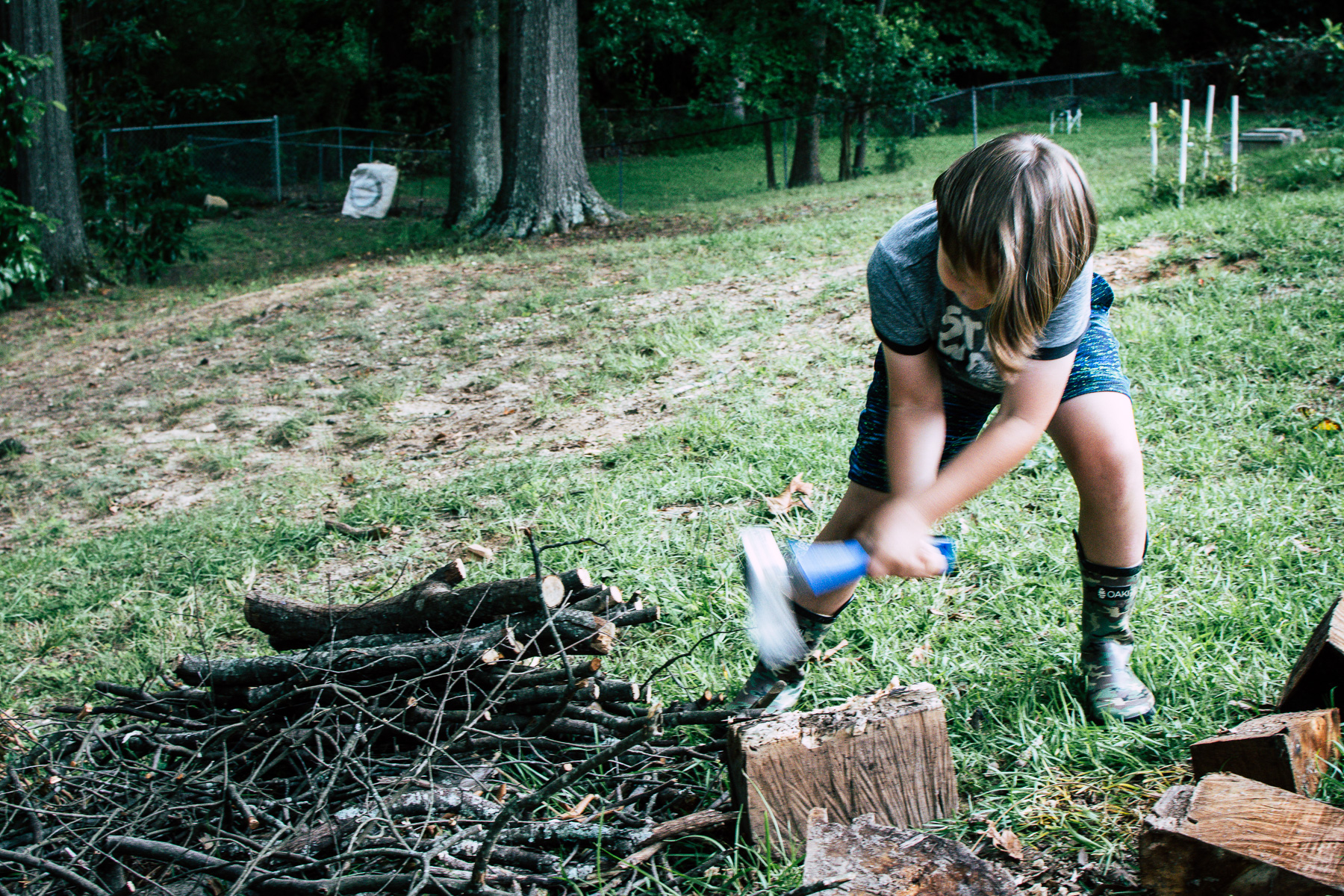
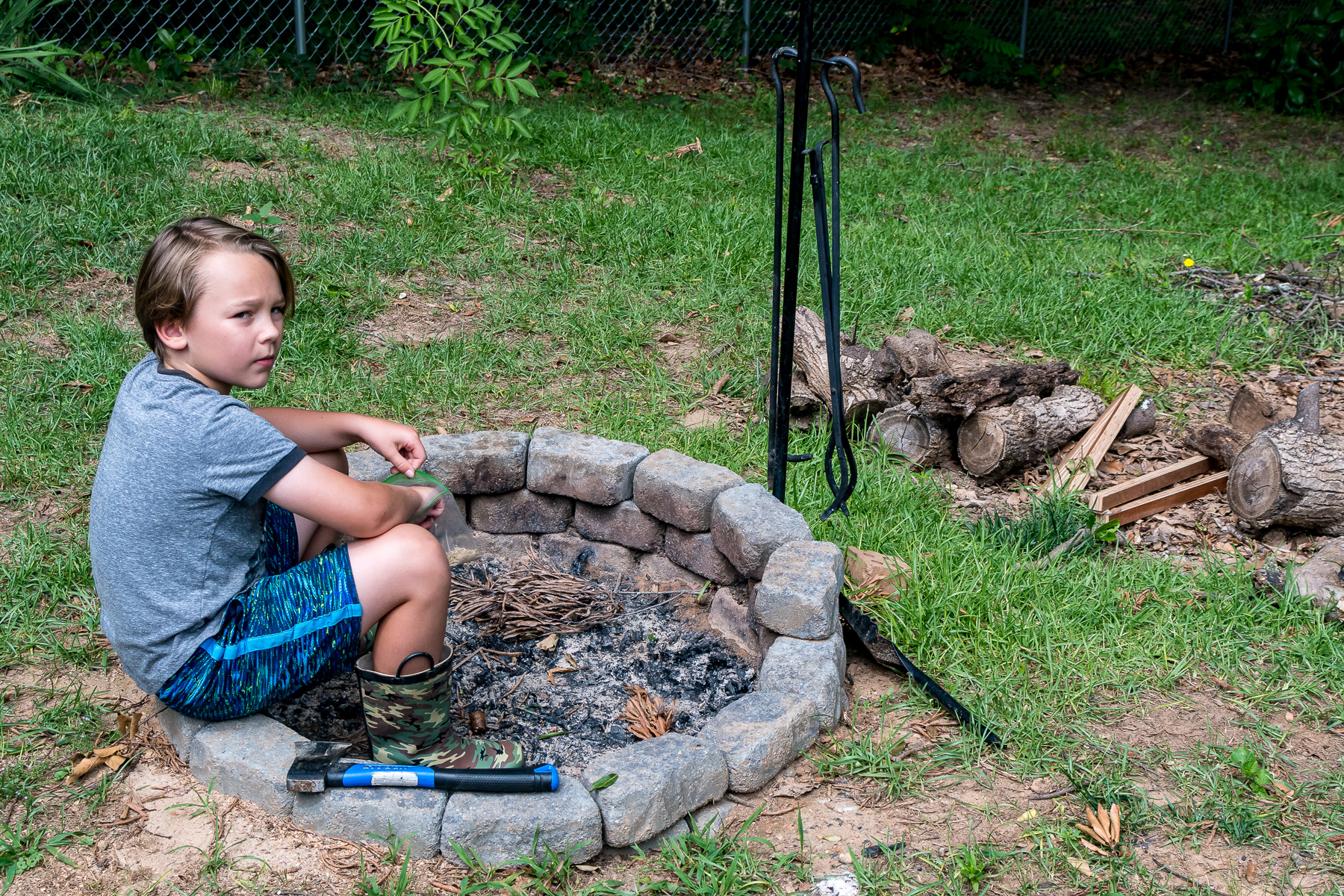
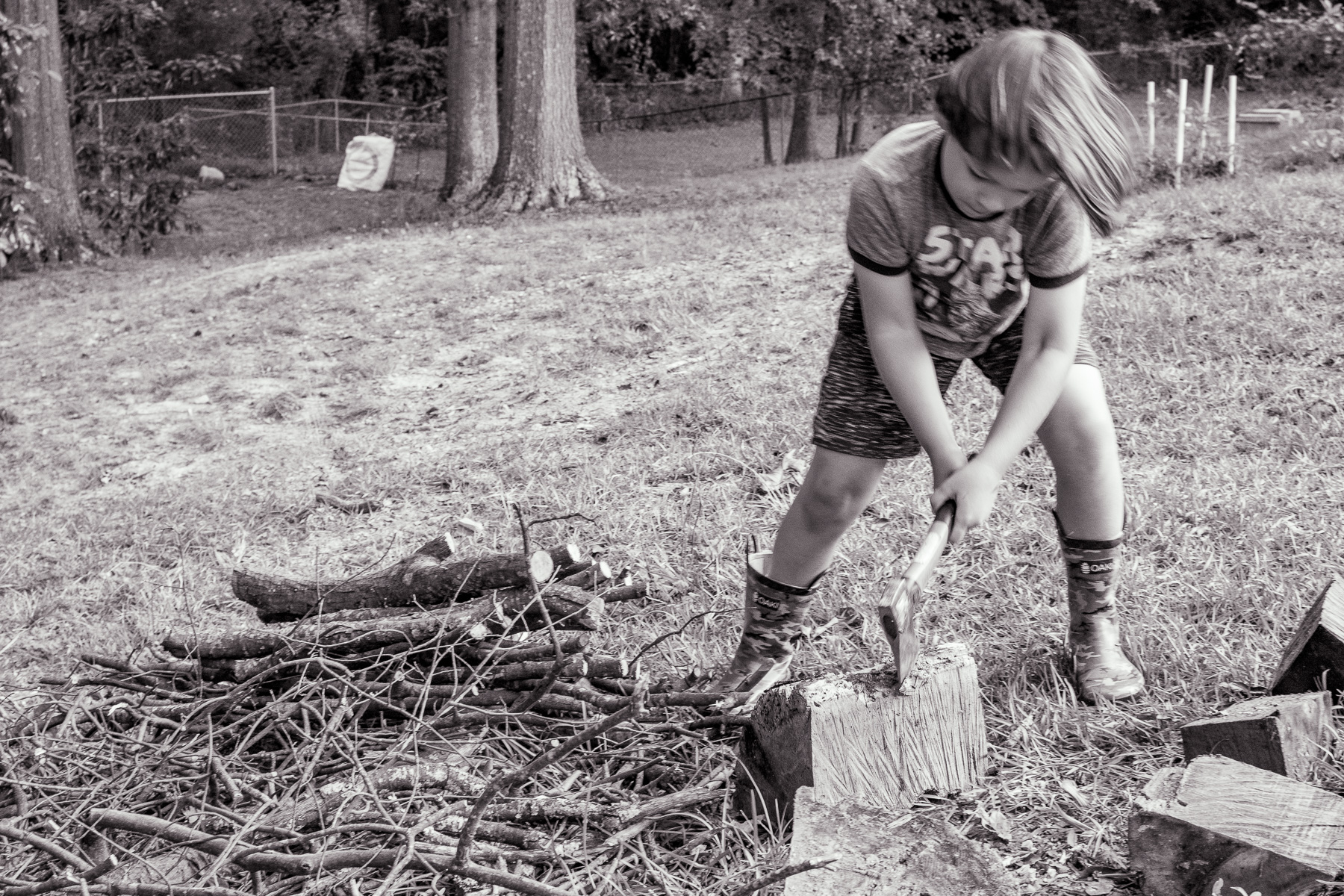
The Boy wanted to try to start a fire with his flint and steel from the survival pack he bought earlier this year. He didn't get it started, but he enjoyed chopping at a half-rotten (but dry) log to get small chips to try to catch a spark.

I tried to explain to him that that would not be sufficient, that he should try other methods. We tried using a small planer to produce some thin strips, but nothing worked.

In the end, he just got some matches.

Day 57: Math, Mowing, Painting, and the Missionary Society

Math

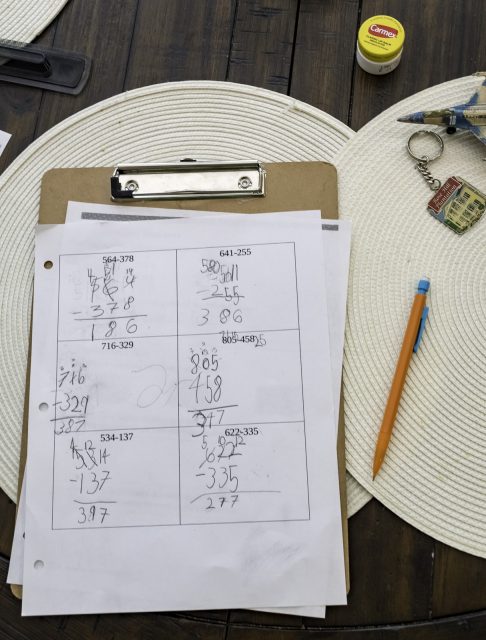
The Boy was having trouble this morning with three-digit subtraction, things like 352-178. He was thinking a little too much, mixing prior knowledge with current practice. For example, in the number above, he would know he had to borrow a 10 from the 10s place in order to subtract 8 properly, but then that would leave him with 4. Instead of writing 4 above the crossed-out 5, he wrote 40. Which is technically correct. But the be was subtracting 7 from 40 and coming up with 33, and before long, he was subtracting one three-digit number from another three-digit number and coming up with a six-digit answer.

I remember the frustration of borrowing numbers in subtraction. I, too, experienced it in second grade: I just couldn't figure out how those numbers were shifting around, 5 becoming 4 so I could subtract something from the 1s place. Everyone tried explaining it to me: my teacher, mom, dad, the girl who babysat me from time to time. It just didn't make any sense to me no matter how often and how many different ways it was explained.

So I understood the Boy's frustration this morning. I sat with him a while, taking a break from my own work, and tried to help him through it.

"Yes, but Daddy, that's the 10s place, so it's not just 4, it's 40."

"Technically, you're correct, but..."

"What do you mean 'technically'? What does that even mean?!"

It was another moment that I found myself in awe of elementary school teachers. I don't teach many new skills: I mainly take existing skills and improve them. The kids can write when they come to me; I just help them write better. They can read when they come to me; I just give them tricks for comprehending more challenging texts: things like "make sure you keep track of your pronouns' antecedents -- you need to know who 'he' is when the author uses that pronoun," or "determine the part of speech of that unknown word -- that will help you a lot in inferring a possible meaning." But just taking a kid who doesn't know at all how to read and turning her into a reader? I haven't got the slightest clue how to do that. I know it's just a matter of training: I minored in education in college, but in secondary education -- not primary. An entirely different field of study.

Still, having experienced that frustration myself, I had a certain patience and understanding of his frustration.

This is why some feel that teachers who teach subjects they were always good at isn't as effective as alternatives. We -- for I was always good at literature and decent at writing -- know how to do these skills seemingly instinctively. It's hard to teach someone how to do something that you can do, relative to the struggling student, without thinking. It's better to teach something that you yourself have struggled with, goes the thinking. But the problem with that: where's the passion? I don't teach English just because I want to teach and happened to choose English. I teach it because I myself enjoy writing; I teach it because I love reading. I teach it because I have a certain excitement about certain books, certain poems, even certain reading skills that I love to share with students. I struggled with math, and the only passion I feel about it is a certain kind of revulsion.

Mowing and Painting

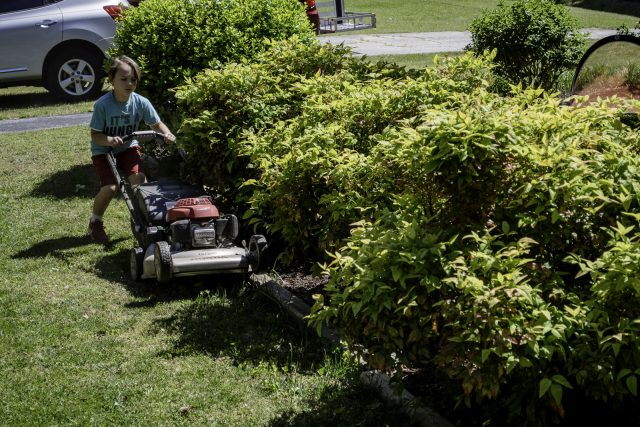
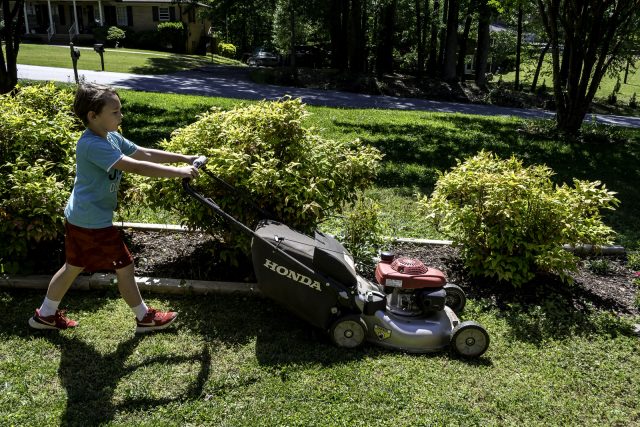
The Boy loves working in the yard. We bought a battery-powered weed eater just so he could help (which is now out of trim line, which we don't have). Today, after scolding me a little bit about still not having the right line, he asked if he could help mow.

When we first started doing this, I would let him do the little flat, straight portion in the front yard just between the flower bed and the crape myrtles. Today, I let him tackle some of the more challenging areas.

"Make sure you keep the line of uncut grass just on the inside edge of your outside wheel," I explained, demonstrating just what I meant.

He tried, poor fellow, but he just couldn't stop drifting inward, leaving slivers of uncut grass with every row.

Still, I can't help but be pleased that he's still willing to help. At some point, the job will be his entirely.

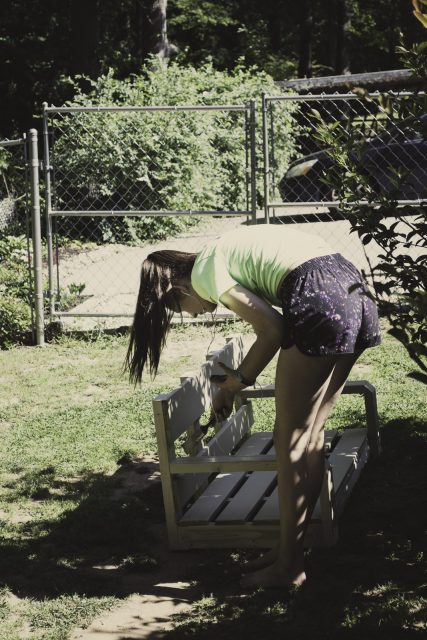
The Girl finished up the afternoon with a little more painting: the swing I'd started Saturday for K's Mother's Day gift is nearing completion.

The Missionary Society Meeting

It's always a chapter that confuses students: the 24th chapter in To Kill a Mockingbird feels like someone took a chapter out of a completely different novel, changed a few names to match a few characters' names in Mockingbird, and just slipped it into the stream of the story. The only connection it seems to have with the rest of the book is the news of the death of Tom Robinson toward the end of the chapter. I contend that in many ways it's one of the most important chapters in the book as it fully develops one of the book's major themes: the hypocrisy of Southern white Christians.

Most of the chapter centers around Aunt Alexandra's hosting the Maycomb Alabama Methodist Episcopal Church South Missionary Society meeting. Scout attends as "a part of [Alexandra's] campaign to teach [Scout] to be a lady." Poor Scout is lost from the beginning: she asks about what they studied and gets confused immediately:

“Oh child, those poor Mrunas,” [Mrs. Merriweather] said, and was off. Few other questions would be necessary.

Mrs. Merriweather’s large brown eyes always filled with tears when she considered the oppressed. “Living in that jungle with nobody but J. Grimes Everett,” she said. “Not a white person’ll go near ‘em but that saintly J. Grimes Everett.”

Mrs. Merriweather played her voice like an organ; every word she said received its full measure: “The poverty... the darkness... the immorality—nobody but J. Grimes Everett knows. You know, when the church gave me that trip to the camp grounds J. Grimes Everett said to me—”

“Was he there, ma’am? I thought—”

“Home on leave. J. Grimes Everett said to me, he said, ‘Mrs. Merriweather, you have no conception, no conception of what we are fighting over there.’ That’s what he said to me.”

“Yes ma’am.”

“I said to him, ‘Mr. Everett,’ I said, ‘the ladies of the Maycomb Alabama Methodist Episcopal Church South are behind you one hundred percent.’ That’s what I said to him. And you know, right then and there I made a pledge in my heart. I said to myself, when I go home I’m going to give a course on the Mrunas and bring J. Grimes Everett’s message to Maycomb and that’s just what I’m doing.”

A skilled reader with a moderate amount of background knowledge immediately understands: this J. Grimes Everett is a missionary to the Mrunas, who, in turn, are clearly an African tribe ("Not a white person’ll go near ‘em but that saintly J. Grimes Everett").

The reason the author includes the Mrunas is clear only toward the end of the missionary society meeting, when Mrs. Merriweather begins talking about Atticus's decision to represent Tom:

Mrs. Merriweather nodded wisely. Her voice soared over the clink of coffee cups and the soft bovine sounds of the ladies munching their dainties. “Gertrude,” she said, “I tell you there are some good but misguided people in this town. Good, but misguided. Folks in this town who think they’re doing right, I mean. Now far be it from me to say who, but some of ‘em in this town thought they were doing the right thing a while back, but all they did was stir ’em up. That’s all they did. Might’ve looked like the right thing to do at the time, I’m sure I don’t know, I’m not read in that field, but sulky... dissatisfied... I tell you if my Sophy’d kept it up another day I’d have let her go. It’s never entered that wool of hers that the only reason I keep her is because this depression’s on and she needs her dollar and a quarter every week she can get it.”

“His food doesn’t stick going down, does it?”

Miss Maudie said it. Two tight lines had appeared at the corners of her mouth. She had been sitting silently beside me, her coffee cup balanced on one knee. I had lost the thread of conversation long ago, when they quit talking about Tom Robinson’s wife, and had contented myself with thinking of Finch’s Landing and the river. Aunt Alexandra had got it backwards: the business part of the meeting was blood-curdling, the social hour was dreary.

“Maudie, I’m sure I don’t know what you mean,” said Mrs. Merriweather.

“I’m sure you do,” Miss Maudie said shortly.

Yet this is where students really get lost. In typical Southern gentile fashion, Mrs. Merriweather won't deign to gossip about anyone -- how uncivilized -- so she simply makes talks about Atticus in the third-person plural. And everyone in the room knows exactly who she's talking about -- everyone but Scout. And our young readers.

Today, my English I students started the adventure of figuring out this marvelous chapter. I always read the relevant passage aloud in class. It's one of the most enjoyable things I do all year. I lay on the Southern accent, dropping final rs ("squalor" becomes "squala") and altering the cadence and tone of my reading. How to do that when in lock-down? Simple: record it. My favorite part -- that passage above.