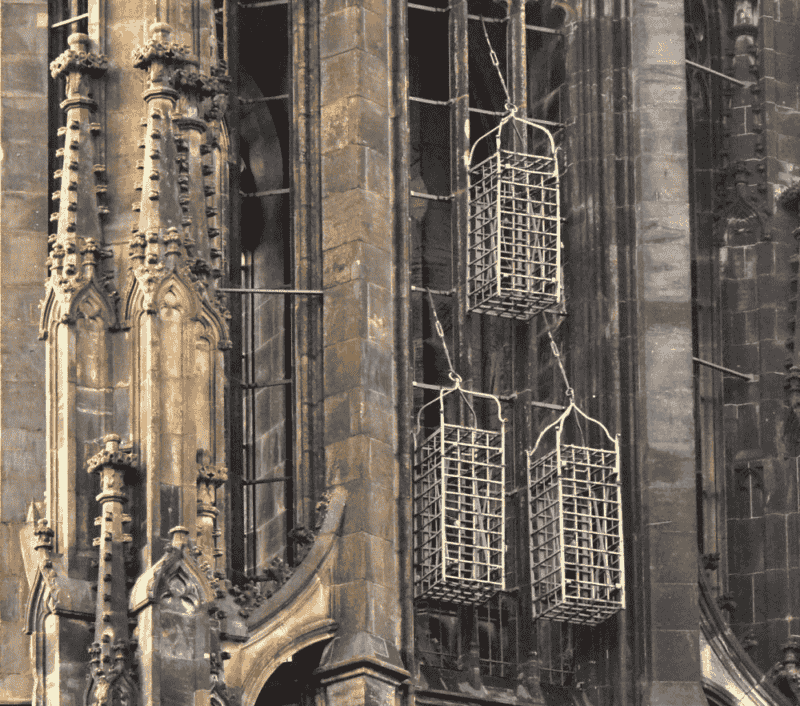
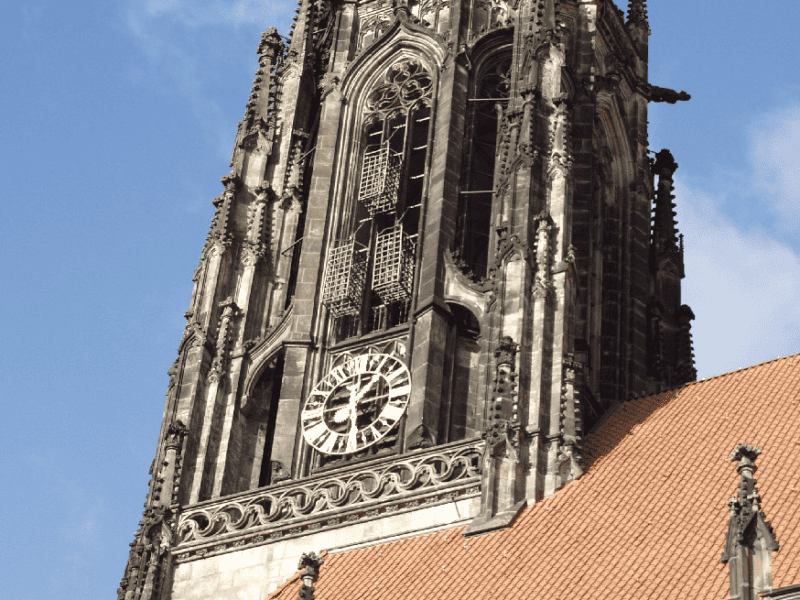
The Hanging Cages of St. Lambert's Church in Münster
catholicism
The Hanging Cages of St. Lambert's Church in Münster
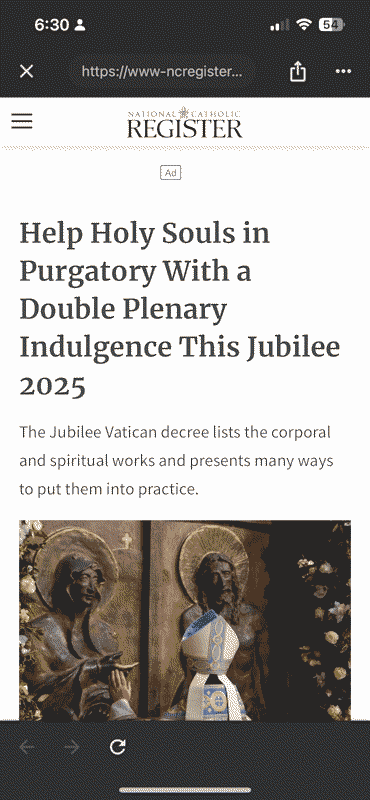
"One plenary indulgence — remission of all temporal punishment due to sin — per day is a tremendous gift of the Church, but two in one day is an enormously rare exception granted for this Holy Jubilee Year 2025" (Source). That's two for one! Act now while supplies last!
If you call within twenty minutes, get a free shower squeegee with your order!
And it's not the Onion.
According to the author, Bishop Robert Barron, this book is intended to help bring Catholics back to the fold in regards to the Catholic teaching that despite all appearances to the contrary, the cracker and wine of Mass become the body and blood of Jesus.
How does he do this? Does he deal with the simple fact that one reason a lot of people don't believe this literal-bronze-age nonsense is because we've learned a bit about the nature of reality in the past two thousand years, and we understand that the classic explanation of substance and accident (a la Aristotle) is really just an ancient attempt at explaining the world which has now evolved into current scientific understanding? No. Does he deal with the Church's own admission that nothing physically changes? Even more no. So how does he deal with it? The only way he can -- the best way Catholics deal with anything in their faith that inherently makes no sense. He piles on the metaphors.
But why then the prohibition [in the Garden of Eden]? Why is the tree of the knowledge of good and evil forbidden to them? The fundamental determination of good and evil remains, necessarily, the prerogative of God alone, since God is, himself, the ultimate good. To seize this knowledge, therefore, is to claim divinity for oneself-and this is the one thing that a creature can never do and thus should never try. To do so is to place oneself in a metaphysical contradiction, interrupting thereby the loop of grace and ruining the sacrum convivium (sacred banquet). Indeed, if we turn ourselves into God, then the link that ought to connect us, through God, to the rest of creation is lost, and we find ourselves alone. This is, in the biblical reading, precisely what happens. Beguiled by the serpent's suggestion that God is secretly jealous of his human creatures, Eve and Adam ate of the fruit of the tree of the knowledge of good and evil. They seized at godliness that they might not be dominated by God, and they found themselves, as a consequence, expelled from the place of joy. Moreover, as the conversation between God and his sinful creatures makes plain, this "original."
What is this saying? Does this amount to anything other than just a rehashing of the story with some new metaphors thrown it? I don't see anything more than that.
This complex symbolic narrative is meant to explain the nature of sin as it plays itself out across the ages and even now. God wants us to eat and drink in communion with him and our fellow creatures, but our own fear and pride break up the party. God wants us gathered around him in gratitude and love, but our resistance results in scattering, isolation, violence, and recrimination. God wants the sacred meal; we want to eat alone and on our terms.
Again, this is just metaphor. It doesn't mean anything because it refers only to some story in a book that is itself of dubious historical accuracy (read: nonsense). Even Barron would suggest that the story of the Garden of Eden is really more metaphor than anything else, so this is all metaphor about another metaphor.
[T]he salvation wrought through Israel and Jesus and made present in the Mass has to do with the healing of the world. We see this dimension especially in the gifts of bread and wine presented at the offertory. To speak of bread is to speak, implicitly, of soil, seed, grain, and sunshine that crossed ninety million miles of space; to speak of wine is to speak, indirectly, of vine, earth, nutrients, storm clouds, and rainwater. To mention earth and sun is to allude to the solar system of which they are a part, and to invoke the solar system is to assume the galaxy of which it is a portion, and to refer to the galaxy is to hint at the unfathomable realities that condition the structure of the measurable universe. Therefore, when these gifts are brought forward, it is as though the whole of creation is placed on the altar before the Lord. In the older Tridentine liturgy, the priest would make this presentation facing the east, the direction of the rising sun, signaling that the Church's prayer was on behalf not simply of the people gathered in that place but of the cosmos itself.
We can't be surprised at the degree to which Barron relies on metaphor to describe the rituals of the Catholic Mass since he can't even describe his god in straight terms:
God is, in his ownmost reality, not a monolith but a communion of persons. From all eternity, the Father speaks himself, and this Word that he utters is the Son. A perfect image of his Father, the Son shares fully the actuality of the Father: unity, omniscience, omnipresence, spiritual power. This means that, as the Father gazes at the Son, the Son gazes back at the Father. Since each is utterly beautiful, the Father falls in love with the Son and the Son with the Father-and they sigh forth their mutual love. This holy breath (Spiritus Sanctus) is the Holy Spirit. These three "persons" are distinct, yet they do not constitute three Gods.
The father "speaks himself"? What could that possibly mean? He insists that "as the Father gazes at the Son, the Son gazes back at the Father." How can spiritual beings gaze at each other? It makes no sense. And then they "sigh forth their mutual love." What, do the Father and the Son breath? What are they sighing? They don't even have bodies -- how can this make any sense? That "holy breath" is the third part of this weird god? And yet it's one god? In an attempt to use metaphor to explain the inherently self-contradictory notion that three is one and one is three, Barron just ends up uttering inane deepities.
At E's basketball practice a few weeks ago, I noticed some Catholic reading materials free for the taking, so always interested in what others say about religion, I took some copies. One of them was This Is My Body: A Call to Eucharistic Revival by Bishop Robert Barron, whom I've written about here and here (among other posts).
The Good Reads blurb summarizes:
A recent Pew Forum survey revealed the startling statistic that 69% of Catholics do not believe in the Real Presence of Christ in the Eucharist. For the majority of Catholics today, the Eucharist is merely a symbol of Christ, and the Mass is merely a collectivity of like-minded individuals gathering to remember his life.
This indicates a spiritual disaster, for the Eucharist is “the source and summit of the Christian life.” In response to this crisis, Bishop Robert Barron, then the Chair of the Committee on Evangelization and Catechesis for the United States Conference of Catholic Bishops, began working with his brother bishops on a solution. From these conversations, the National Eucharistic Revival was born.
This Is My Body: A Call to Eucharistic Revival is designed to accompany that revival. In this brief but illuminating text, Bishop Barron offers a threefold analysis of the Eucharist as sacred meal, sacrifice, and Real Presence, helping readers to understand the sacrament of Jesus’ Body and Blood more thoroughly so that they might fall in love with him more completely.
Discover the profound truth flowing out of Jesus’ words at the Last “Take, eat; this is my body. . . . Drink from it, all of you; for this is my blood of the covenant.”
I'll have a lot more to say about the topic of the book later, but there was one little bit that caught my eye this evening:
One of the most beautiful evocations of this heavenly meal is found in the twenty-first chapter of John's Gospel. The author of John's Gospel was a literary genius, and his work is marked by subtle and intricate symbolism. Therefore, we must proceed carefully as we examine this story.
It seems this depiction of John writing his gospel (of course, John didn't write the gospel; all four gospels are anonymous, with the names we associate with them becoming attached a century or two after they were written, if memory serves) describes a strictly human author. The human author of the book seems to be the literary genius. But wasn't the author God according to Christians? How can both of these statements be true?
It's really part of the song and dance more liberal Christians use to deal with the trickier parts of the Bible while holding on to the tasty bits they enjoy. The ugly parts? That's human. The beautiful parts? That's God.
But a Catholic like Barron would take a self-contradictory notion that there were human limitations but God's still the ultimate author. Pious Catholics, it seems, don't have a problem with contradictions, but one only need look at the topic of Barron's book -- transubstantiation -- to see that.
www.ncregister.com/commentaries/jimmy-akin-being-precise-about-catholic-church-teaching-on-hell
Pope Francis recently sparked a discussion when he told an Italian television program, “What I am going to say is not a dogma of faith but my own personal view: I like to think of hell as empty; I hope it is.”
I was not surprised he would have this view. It is common in some ecclesiastical circles and was proposed by theologian and priest Hans Urs von Balthasar in his book Dare We Hope That All Men Be Saved?
Given how Pope Francis’ comments often function as a lightning rod, I was not surprised by the discussion that followed, and one contribution was a recent article by Ralph Martin.
Although framed as a piece about what the Church teaches on hell, Martin spent much of it arguing for his own view, which is the traditional one, that hell is both a real possibility and an actual reality for many people. He explores this further in his book Will Many Be Saved?
I wish Martin well in arguing his case — and arguing it vigorously. The thought that hell might be a real but unrealized possibility is a comforting one that can be attractive to many today. However, Scripture contains serious warnings about hell that do not sound hypothetical.
As a result, the theological field should not simply be ceded to what we moderns find comfortable and reassuring. If there is to be any reassessment of the traditional view of hell as an actual reality for many, Scripture’s statements need to be taken seriously and both sides need to be argued vigorously.
(I’d note, in particular, that in his book von Balthasar never even addresses Luke 13:23-24, where in response to the question, “Lord, will those who are saved be few?” Jesus responds, “Strive to enter by the narrow door; for many, I tell you, will seek to enter and will not be able.”)
My sympathies are thus with Martin, but I would refine a few things about his article.
First, regarding Pope Francis’ statement that what he was about to say was “not a dogma of faith,” Martin offers a definition of dogma that could suggest it is restricted to revealed truths connected with salvation. I would point out, by contrast, that in current theological jargon, a dogma is any truth that the Catholic Church has infallibly defined to be divinely revealed, whether or not it has any direct connection with salvation. (Culpably rejecting a dogma is a mortal sin; but the truth itself doesn’t have to have a direct connection with salvation.)
Second, there is a passage where Martin conveys a misleading impression about the views of Cardinal Avery Dulles. First, he says that “the traditional interpretation ... by the Church’s greatest theologians is that it is very likely that many people go [to hell],” then he identifies Cardinal Dulles as “perhaps the leading American theologian of the 20th century,” and then he cites a 2003 article that Dulles wrote in First Things.
The problem is that Martin quotes a part of the article in which Cardinal Dulles refers to several passages of Scripture and says, “Taken in their obvious meaning, passages such as these give the impression that there is a hell, and that many go there; more in fact, than are saved.” The impression is thus that Cardinal Dulles is firmly in the line of “the Church’s greatest theologians” who believe that “many go there; more in fact, than are saved.”
However, this is not Cardinal Dulles’s view. He notes the obvious interpretation of various Bible passages without asserting that the obvious one is the only possible one. In fact, he concludes:
The search for numbers in the demography of hell is futile. God in His wisdom has seen fit not to disclose any statistics. Several sayings of Jesus in the Gospels give the impression that the majority are lost. Paul, without denying the likelihood that some sinners will die without sufficient repentance, teaches that the grace of Christ is more powerful than sin: “Where sin increased, grace abounded all the more” (Romans 5:20). Passages such as these permit us to hope that very many, if not all, will be saved.
All told, it is good that God has left us without exact information. If we knew that virtually everybody would be damned, we would be tempted to despair. If we knew that all, or nearly all, are saved, we might become presumptuous. If we knew that some fixed percent, say fifty, would be saved, we would be caught in an unholy rivalry. We would rejoice in every sign that others were among the lost, since our own chances of election would thereby be increased. Such a competitive spirit would hardly be compatible with the gospel.
Martin’s article thus conveys a misleading impression of Dulles.
What does the Church actually teach? This is found in the Catechism of the Catholic Church, which says, in part, “The teaching of the Church affirms the existence of hell and its eternity. Immediately after death the souls of those who die in a state of mortal sin descend into hell” (1035).
The Church thus teaches that hell is a real possibility. If you die in mortal sin, you go there. But does the Church leave room for the idea that God might rescue all from mortal sin — even at the last moment?
The Catechism states, “The Church prays that no one should be lost: ‘Lord, let me never be parted from you.’ If it is true that no one can save himself, it is also true that God ‘desires all men to be saved’ (1 Timothy 2:4), and that for him ‘all things are possible’ (Matthew 19:26)” (Catechism, 1058).
The Catechism thus seems open to the possibility that God — for whom “all things are possible” — might be able to rescue all from mortal sin and thus hell might be empty.
This view seems to be permitted on other grounds. After von Balthasar proposed it in Dare We Hope, Pope St. John Paul II named him a cardinal — specifically for his theological contributions — though Father von Balthasar died before the consistory.
Further, as Cardinal Dulles notes in his 2003 article, John Paul II seemed to have a change of view on this subject. The cardinal notes that in his non-magisterial 1995 interview book Crossing the Threshold of Hope, the Pope raised Father von Balthasar’s view and says, “yet the words of Christ are unequivocal. In Matthew’s Gospel he speaks clearly of those who will go to eternal punishment.”
However, as the cardinal notes, in a magisterial text in 1999, Pope John Paul seemed to have shifted, saying, “Damnation remains a possibility, but we are not granted, without special divine revelation, the knowledge of whether or which human beings are effectively involved in it” (General Audience, July 28, 1999, emphasis added).
Based on what he said, John Paul was open on the question of “whether” human beings actually go to hell, and Cardinal Dulles concludes that “the Pope may have abandoned his criticism of Balthasar.”
It should be noted that in the version of the audience currently on the Vatican website, the words “whether or” have been deleted. However, this does not alter what John Paul II apparently said, and we cannot know why the words were deleted or whether John Paul II gave his approval to this edit.
For his part, Pope Benedict XVI also took an optimistic view regarding hell in his 2007 encyclical Spe Salvi. He states:
There can be people who have totally destroyed their desire for truth and readiness to love, people for whom everything has become a lie, people who have lived for hatred and have suppressed all love within themselves. This is a terrifying thought, but alarming profiles of this type can be seen in certain figures of our own history. In such people all would be beyond remedy and the destruction of good would be irrevocable: this is what we mean by the word hell (45).
He then contrasts these with people who are so pure they go straight to heaven and then concludes:
Yet we know from experience that neither case is normal in human life. For the great majority of people — we may suppose — there remains in the depths of their being an ultimate interior openness to truth, to love, to God (46).
This latter category goes to purgatory to be purified. Pope Benedict thus thought that “we may suppose” that few go to hell, few go directly to heaven, and “the great majority of people” go to purgatory before heaven.
We thus see the three most recent popes taking optimistic views of hell, with the later John Paul II seemingly open to the idea it may be empty, Benedict holding that we may suppose those who go there are few, and Francis hoping that it is empty.
I’m firmly convinced of the value for theological discussion of vigorously arguing the traditional view that some and even many go to hell — and hearing what the optimists have to say in response.
At the same time, when presenting the teaching of the Church, we should be aware of the flexibility that is being displayed on this matter, including by the recent popes.
There's a new cafe in Warsaw called "Madonna." It uses images of Mary and Jesus as decorations, and it's driving the fundamentalist Catholics crazy. Just look at the list of blasphemies they're committing:
The horrors!
Just look at the pictures:
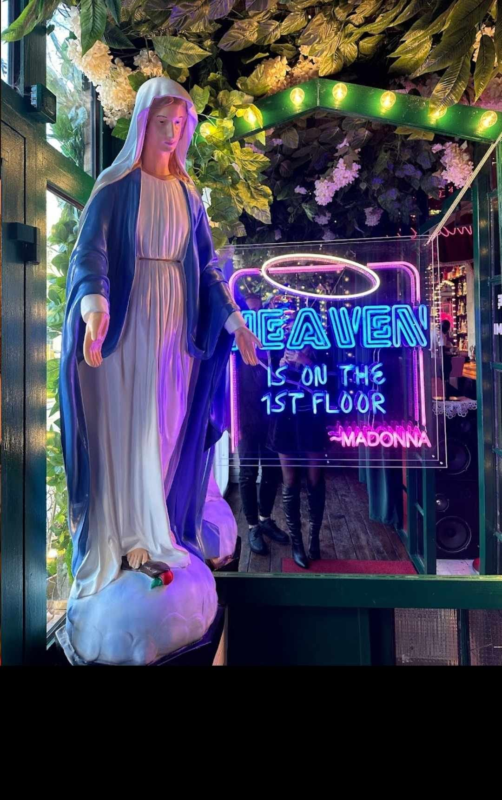
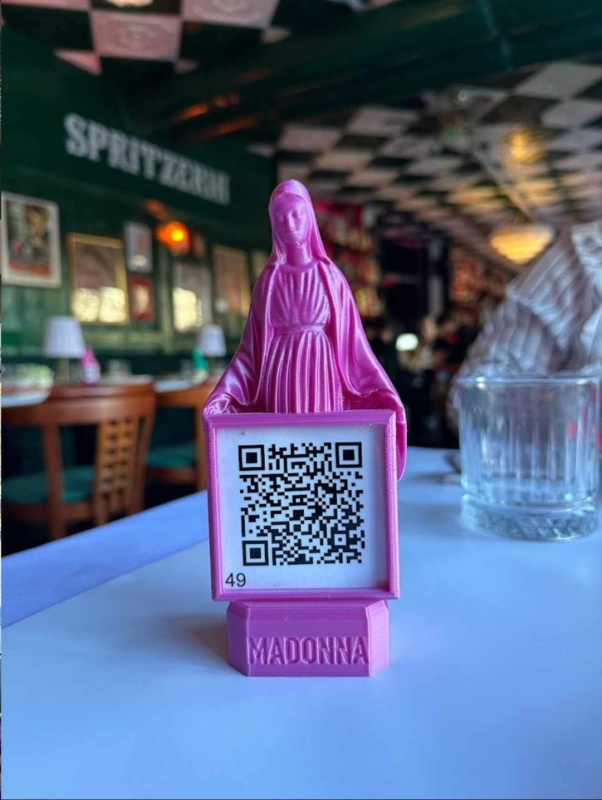
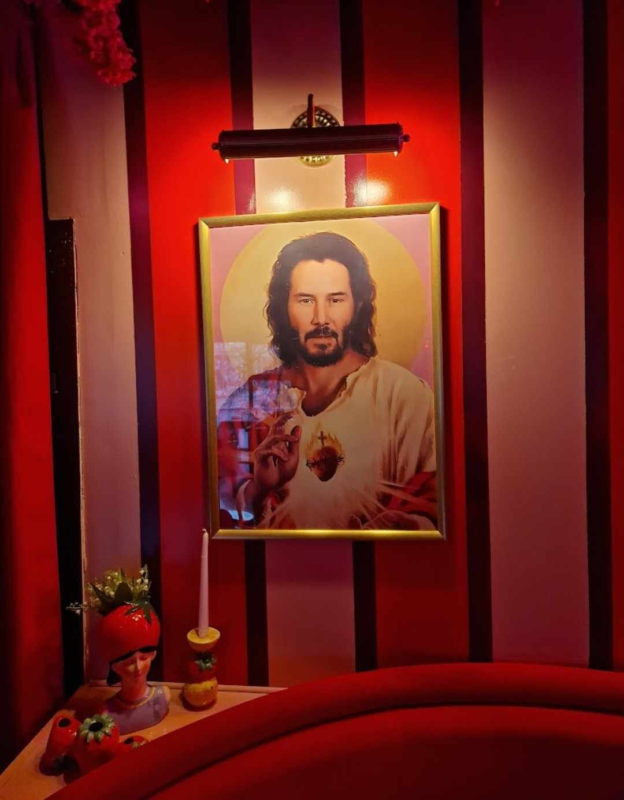


It's unbelievable.
The price of democracy can be steep for fundamentalists.
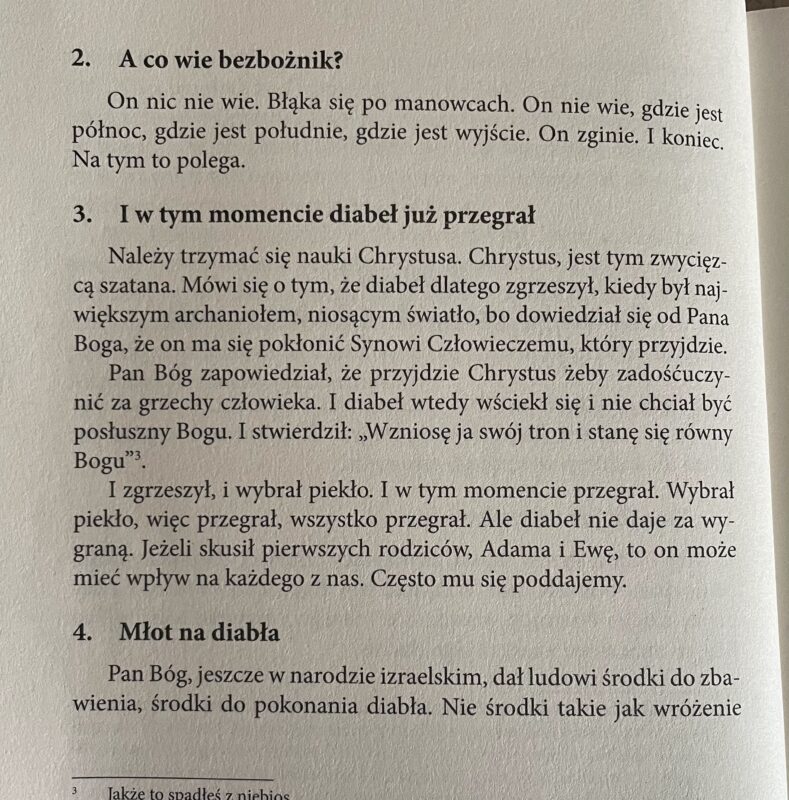
He doesn't know anything. He wonders astray. He doesn't know where north is, where south is, or where is the exit. He dies. And nothing. That's what it's all about.
Conservative Christians on social media are having fits about Pride Month. They like to point out that pride was, in their view, the original sin of the angels. Never mind that this notion owes more to Milton and Paradise Lost than to anything in the Bible -- once something gets in the conservative Christian psyche, it's hard to shake it out.
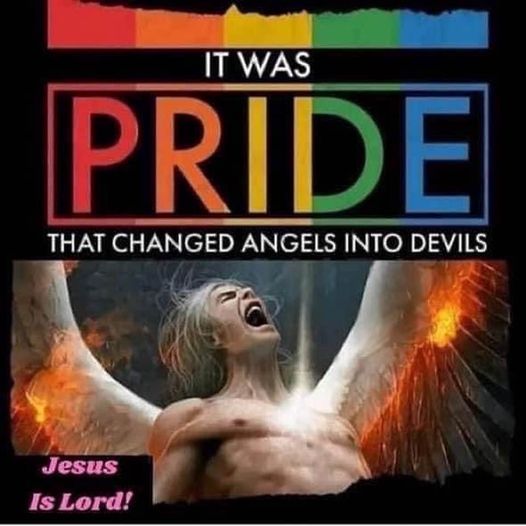
But no conservative Christian is as upset about Pride Month as Catholics, because June is dedicated to the "Sacred Heart of Jesus." Conservative Catholics are upset about this, suggesting Catholics need to "reclaim the month."
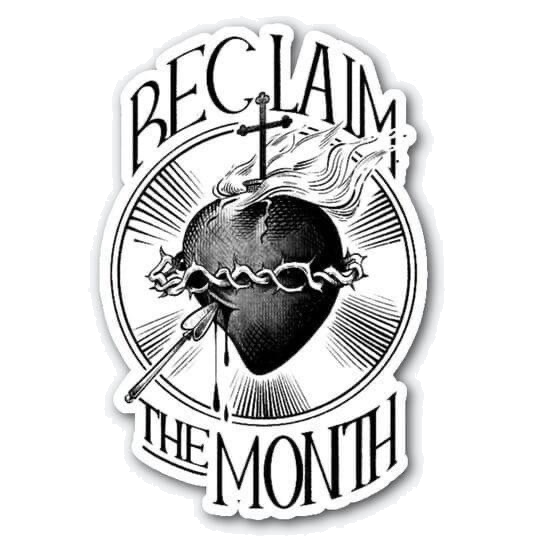
I'm curious how they see this working exactly. Do they expect that in "reclaiming the month," they can convince masses of people to abandon Pride Month and embrace this idea? Most non-Catholic Christians have never heard of this notion of the "Scared Heart of Jesus." They might ask, "What about his other internal organs? Is there a month of the Sacred Spleen of Jesus, too?"
The Catholic Culture website explains it thusly:
Understood in the light of the Scriptures, the term "Sacred Heart of Jesus" denotes the entire mystery of Christ, the totality of his being, and his person considered in its most intimate essential: Son of God, uncreated wisdom; infinite charity, principal of the salvation and sanctification of mankind. The "Sacred Heart" is Christ, the Word Incarnate, Saviour, intrinsically containing, in the Spirit, an infinite divine-human love for the Father and for his brothers.
"Month of the Sacred Heart"
I don't think it will sell in 2023...