Tag Archives: ameryka

Over the Shoulder

It used to be something of an obsession. “What was I doing around this time X years ago?” I’d ask before opening up my journal for that month some years earlier and reading to see what happened. Yet what if I’d had a way to thumb through pictures the way I thumbed through my journal entries? For most of my life, I had about as much interest in photography as I had in basket weaving. Then I moved to Poland. And a couple of years after returning to the States, I moved back to Poland, then armed with a digital camera. And so I can open up a photo viewer and easily look over my shoulder.

September 2001: I’d just moved back, and I was still taking daily walks in the fields behind the house where I rented a room. Such pictures now seem almost unreal: did I really live there?

Autumn Babia

September 2002: The fascination remained. I was still talking almost daily walks in the fields, heading up to a small patch of trees known to locals as “Cats’ Castle”, watching the sunset from various locations, impressed that the church was visible from almost every point in the central part of the village.

DSC02158

And then an empty year. Did my computer crash? Did I not take many pictures? Whatever the cause, September 2003 is void of pictures.

September 2004: K and I had just gotten married. We’d brought all our lovely wedding gifts — the glass paintings and various prints — to my apartment which was then our apartment. We looked through pictures of our wedding and spent lovely afternoons creating photo albums.

DSC00080

September 2005: Back to the States, to Asheville. “This is where I want to live,” K said the moment she saw the small town surrounded by mountains. It was understandable: it looked so much like her own home. And have a few lovely parks about didn’t hurt either.

Asheville Botanical Gardens II

September 2006: The Girl was just a few months away. We’d heard all the stories, but who can really p-prepare for how a child is going to change one’s life?

Morning Walk II

September 2007: The Girl was  with us, and already showing her precocious nature. She sat only to roll; she crawled only to crash; she lived only to giggle and fuss.

DSC_9745

September 2008: L, able to walk, began asserting her independence. The innocence would surely linger?

DSC_0290

September 2009: Independence increased.

DSC_8037

September 2010: We learned quickly that owning a house is owning a project. A never-ending, always-bank-account-draining, eternally-exhausting project.

DSC_6199

September 2011: Where did that baby go? Certainly she’s somewhere around here?

VIV_3495

September 2012: If I could have glanced forward in time from 2001, surely a wife, two children, a house, and a cat on a tired Wednesday night would seem just as unrealistic as the fields of Lipnica Wielka seem to me now?

Afternoon Nap

Downtown Rock Hill, Part 2

Is downtown Rock Hill is the story of America? One would certainly hope not, but in some ways, it seems to have all the elements in parallel. Within a couple of blocks we have signs of incredible affluence

VIV_1693

and poverty-driven decay. What’s the difference between these two homes? What’s the difference between the owners of these homes? Over the last few years, my explanations have shifted from the left to the center-right of the political spectrum. The answer seems hinted in other parts of town.

Still only a few blocks away, Nana points out yet another building with personal significance:  the remains of Rock Hill Printing & Finishing. “This was where I was working when I met Papa,” she explains to us. She shows us where she used to enter, pointing out roughly where her desk was.

One wonders if there are any plans to renovate this particular building as others in the area. Just up the road, an old factory has been turned into an apartment complex. One could likely turn this shell into high-ceiling lofts or something similar. But is the demand there? I think back to the abandoned post office just a few blocks away, figuring it’s unlikely that this gigantic building will ever become of anything more than the subject of a blog post.

VIV_1710

Just behind it lies the heart of the factory, once impressive, but now merely tragic. According to one source,

The building of the Rock Hill Printing and Finishing Plant in 1929 moved M. Lowenstein halfway along the way to becoming a totally integrated producer of textiles. The Rock Hill plant bleached, dyed, printed and finished cloth purchased from a variety of sources, primarily in the South. The rapid expansion of Lowenstein through the acquisition of textile mills produced the raw material for the plant and resulted in its own expansion. By the early 1960s, it grew from a plant with 200,000 square feet to one with more than 2 million square feet, which bleached, dyed, and finished both cotton and synthetic fabrics. New processes such as Sanforizing and the use of Scotchgard TM finishing permitted it to create permanent press cloth during the 1970s. Acquired by Springs Industries in 1986, the plant included 23 roller print machines and 7 screen print machines. (textilehistory.org)

Looking at an aerial view of the factory in its heyday, it’s clear the impact its closure had on the economics of Rock Hill. Now, only inspiration remains.

VIV_1715

This is the story of South Carolina, a story that hopefully America as a whole will not echo. But I wonder. South Carolina used to be a textile center. My family’s fate was tied into that of the mills. My mother worked in a mill; my grandmother worked in a mill; countless aunts worked in mills. My father did electrical work in mills; my grandfather likely did masonry work for a mill or two. Every South Carolinian has mill work somewhere in her family history.

VIV_1718

The cemetery just a block or so away is surely filled with those who worked the roller print machines and the bleaching machines, with those who did the screen printing and counted the cost of everything.

VIV_1725

Rock Hill is only one of many textile cities in South Carolina that has suffered this fate. It’s only one of thousands of cities in America that must be harboring doubts that its best days lie in the future.

Polish Picnic

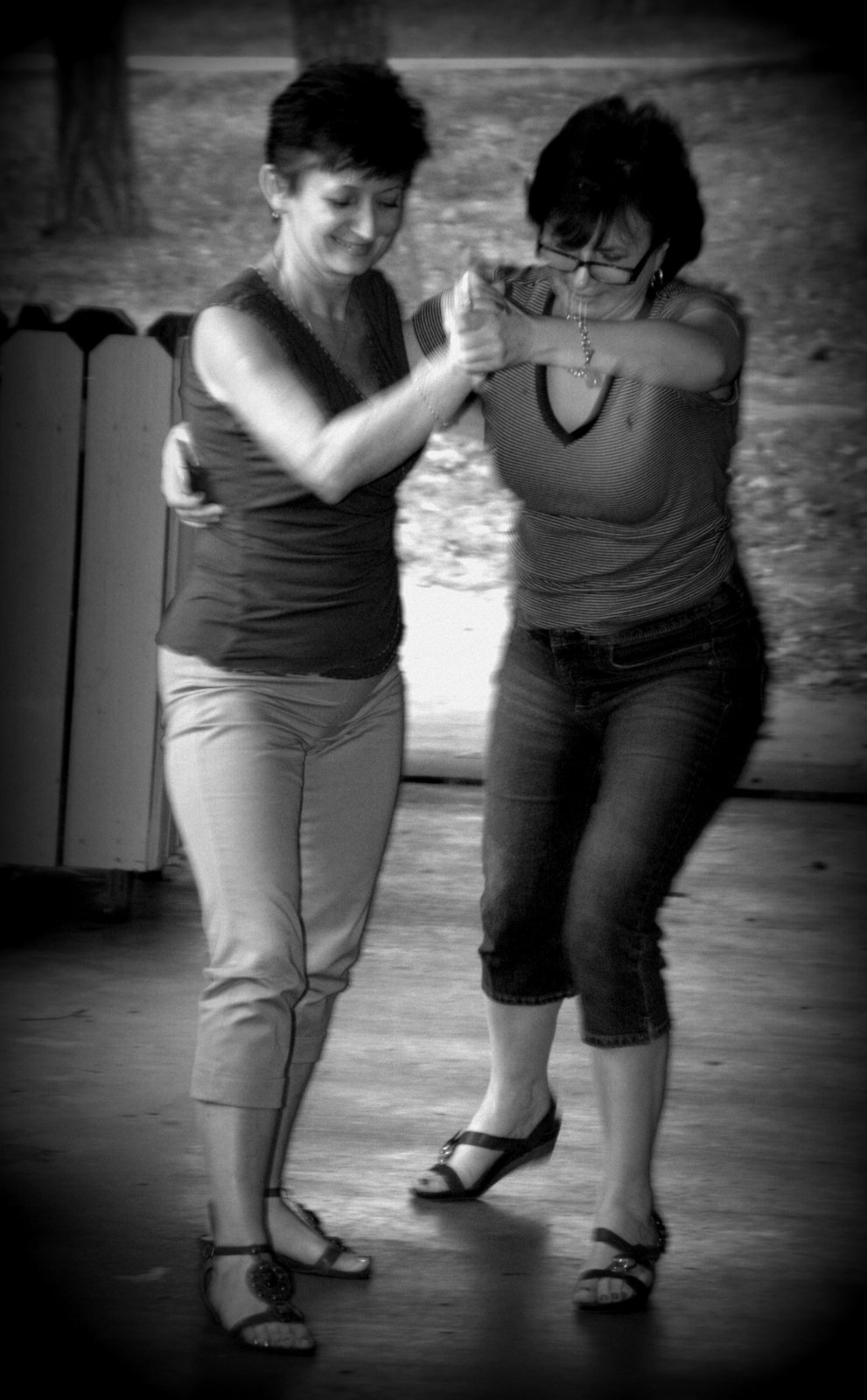
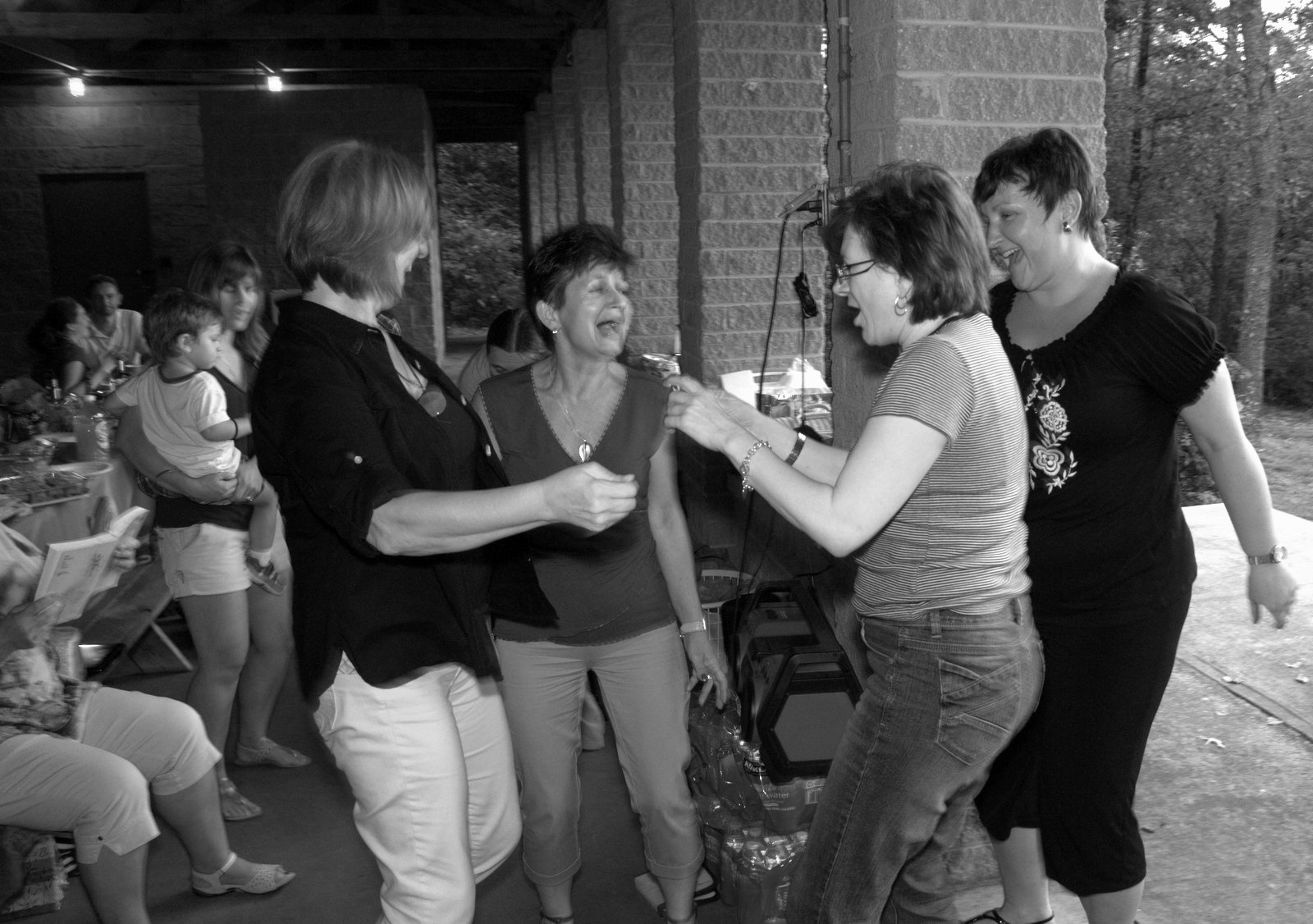
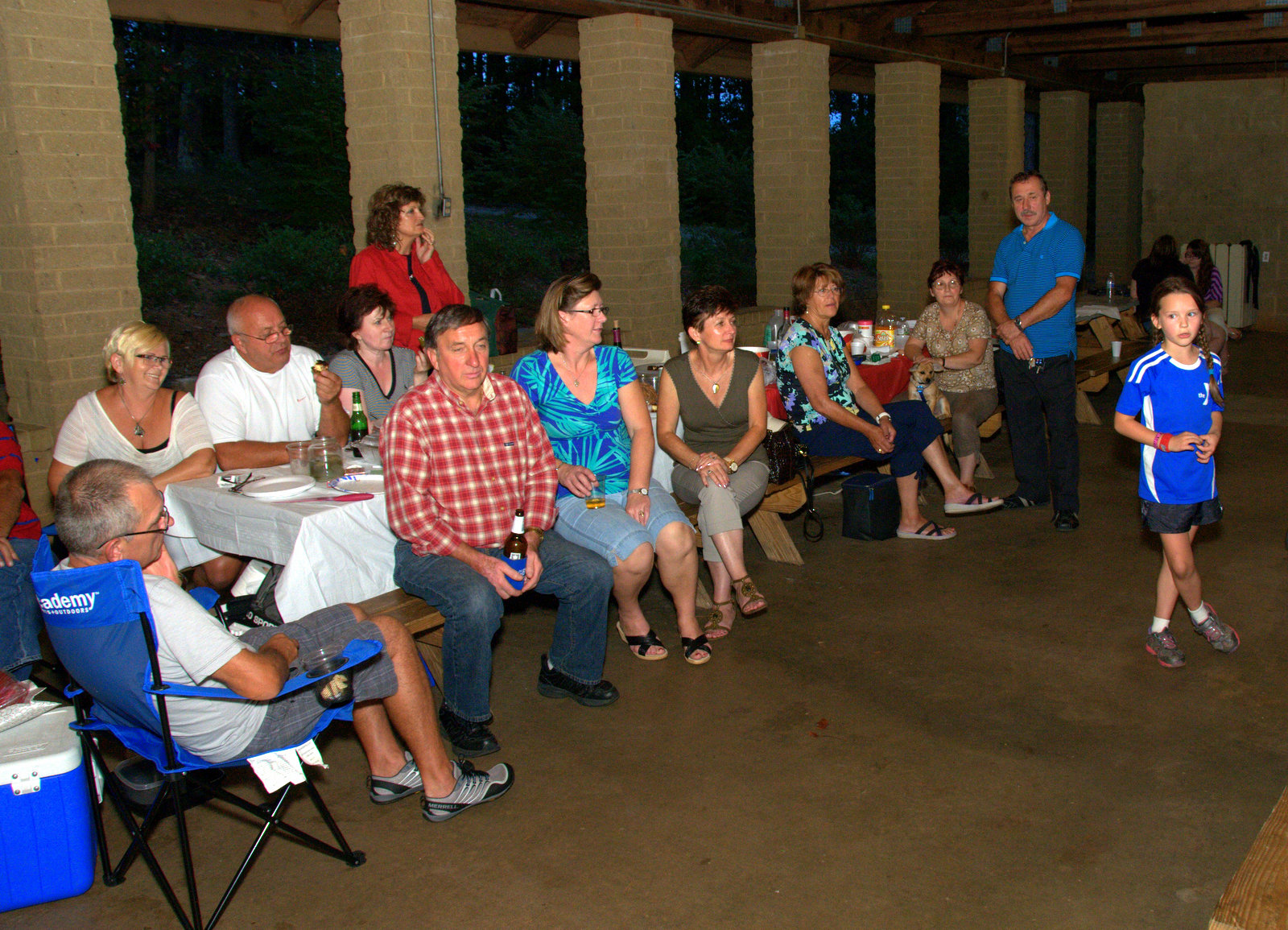
Thirty-three years ago today, Karol Józef Wojtyła became the only Pole elected by the College of Cardinals as Pope. It goes without saying that the logical thing for Poles to do on this date is to celebrate the event as only Poles can.

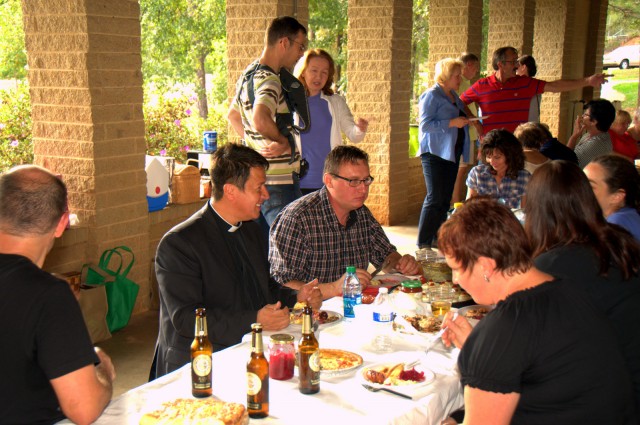
Polish Pot Luck

A picnic — in reality, an informal potluck, as everyone shares with all — is a good start, but just the Polish community did in May for the beatification of John Paul II, the afternoon really started with the outdoor Mass.

Outdoor Mass

As always, when Poles gather together to celebrate some occasion or other, there must be some kind of performance. The children got a chance to show off their newly-acquired Polonaise skills, performing the same routine they did several weeks earlier at a local international festival.

DSC_4123

Post Polonaise

And what would a Polish gathering be without singing? I can’t imagine American ex-pats gathering to do something like this, with the exception of Thanksgiving or Christmas. Even then, only Christmas would incorporate song, and probably not very willingly.

Pynie Wisla

We can’t forget soccer.

DSC_4201


Sześć Bab

I’ve always been fascinated by children of mixed culture, children who speak language X at home (Spanish, Hindi, German, you name it) and English everywhere else. Attempting to raise just such a child has shown me how difficult it can be.

The Girl understands Polish perfectly; she doesn’t speak it unless highly motivated. Part of that is due to living in a mixed household: I don’t always speak Polish around the house. (“Always?!” K would ask incredulously. “How about rarely?”) Additionally, the Girl spends her days in daycare with other English speakers. Polish is that language of babcia, dziadek, and her cousins.

“What you need to do is send her to Poland for the summer,” an acquaintance at the swimming pool advised. “She’s not too young!” the lady assured us over K’s protests that it was a bit much to force on a four-and-a-half-year-old.

Three Half-Polish Girls

Days like today, though, help: Polish friends from Asheville came for a day visit. That made three little girls in the same situation: perfect understanding of spoken Polish who exhibit great reticence to speak it themselves.

Billiards

The hope was that, the two friends, just back from Poland and spending every day with babcia for the last couple of weeks, would speak Polish with the Girl. But if siblings of immigrants speak English to each other (which they usually do), it was perhaps only wishful thinking to hope that the three would break into unrestrained Polish.

Babska Sprawa II

In the living room, however, it was a different matter altogether.

Babcia

In and out ran the girls; English to Polish to English ran their conversation.

Tattoo

Perhaps there was improvement; perhaps not. Perhaps that’s not the most important concern.

Prayers and Candles

Today is All Saints’ Day — one of the best times to be in a Catholic country like Poland. This morning, every single cemetery in Poland had something like this going on.

DSC00332Photo from 2001

Every year I write the same things and probably show some of the same pictures. Since we haven’t experienced All Saints’ Day in Poland since 2004 (has it really been that long?), I’ve only a very limited stock of photos, and an even more limited stock of stories: I can only tell the same stories so many times before even I get tired of them.

That’s something of the appeal of it: the repeating ritual of the Catholic liturgical calendar means we’re always coming back to the same place. It makes life less of a straight line and more of a spiral.

One of the most calming and consoling times in that spiral is the evening of All Saints’ Day, when all the cemeteries flicker with the light of thousands of candles, and the hissing, crackling, and popping of the candles punctuate the prayers of the faithful.

All Saints

I would visit the cemetery at least twice: once when the priests were leading prayers and a second time when no one else was there. Both were calming in very different ways.

Surrounded by Poles who had intimate connections to the cemetery — here lies a brother, a mother, an uncle, a great-grandmother — I felt the peace of the community, even though I was an outsider. Catholicism is very communal and intimate, and prayers in a candle-light cemetery are the epitome of that intimacy and community spirit.

Yet it was when I was alone that I felt more calm than I’ve ever felt in my life. Surrounded by death, I felt more alive than any other time of the year.

Halloween, in comparison, is so distinctly American: commercial, whimsical, with just enough evil to make us worry but not enough to make us act.

I prefer the Polish Catholic version, and I would imagine I always will.

Readjusting

Coming back to the States after a few weeks in Poland requires a few adjustments. Among them:

  1. Driving a car with an automatic transmission. My left foot is bored, restlessly searching for a non-existent clutch, and my right hand wanders to the gear shift every time we approach an intersection.
  2. Hearing English everywhere. This always surprises me: I get used to having to do a little, occasional mental work to understand what’s going on around me. Hearing rivers of voices that are all intelligible to me initially feels a little intrusive.
  3. Hearing other languages everywhere. I go to the grocery store, and I hear Spanish, German, Hindi, and Arabic.
  4. Seeing different races. In the passport check line at the airport, I saw all the colors that make America. In Poland, I see a non-white walking down the street, and it’s difficult not to stare.
  5. "Saggin' and Baggin'" by MalingeringSeeing boys’ underwear in public. On the way back home, we stopped to grab a little something for the Girl to eat because she didn’t eat too much during the journey. Waiting in the check-out line: two adolescent African American boys with their pants seemingly at their knees. I’d mentioned this style in Poland: it seemed incomprehensible to them. It seems incomprehensible to me.
  6. An entire row of paper towels in the supermarket. American consumerism is all about choice. What could possibly be the difference among the towels?
  7. Having someone bag your groceries for you. Perhaps it’s the ultimate sign that Americans are in some way spoiled, but it still surprises me when I go into any grocery store in Poland and have to frantically bag my own groceries before the next customer’s purchases start sliding down into the bagging area. Why not bag as the cashier working? That’s another thing to get used to:
  8. Not having to pay for the bags used in the process. No one provides free shopping bags. The cost is nominal, but the cashier always rings the bags up last. It doesn’t make sense.
  9. Not having potatoes with every meal. I don’t want to see a potato, in any form, for at least a month.
  10. Being warm. In the early morning, temperatures in Jablonka could be in the high forties. During the first week, the temperature seldom rose to the mid-sixties. The warmest it ever got was seventy-five. Back in South Carolina, it’s almost seventy-five when we wake up. It takes some getting used to.

This post is part of the thread: Polska 2010 – an ongoing story on this site. View the thread timeline for more context on this post.

Bags Packed

Henry John Deutschendorf, Jr. made the sentiment famous: bags are packed, and L and I are ready to go, next post from the States, yet mixed emotions linger.

“I want to go home” became L’s refrain a couple of days back, and talking to K on Skype only worsened the situation once. There were variations: “When are we going home?” “Are we going home tomorrow?”

I, too, am ready to go: vacation is great, but returning home is the true heart of any journey. K awaits, as do infected trees await, a likely overgrown lawn, a course to begin Monday, and a host of other things. One can only sit around doing little for a very short time before the feeling of uselessness sets in.

And yet, leaving Poland is always bittersweet. “Would you want to move back?” friends and family asked. Or “When are you all moving back?” Would we move back? Yes, and no. When are we moving back? Soon and never.

I wonder if other countries produce such mixed emotions among its ex-pats and virtual ex-pats?

This post is part of the thread: Polska 2010 – an ongoing story on this site. View the thread timeline for more context on this post.

Boone Hall

Today at Boone Hall plantation, an experience I haven’t had since visiting Auschwitz several years ago: to stand in the center of a hell-on-earth and wonder how it’s even possible. We wandered around the plantation while waiting for a tour, weaving in and out of slave quarters.

DSC_0163

DSC_0161

DSC_0160

The irony of America has never been more palpable. We are country that, from its inception, was about freedom. Yet our wealth was created on the backs of slaves. When people exclaim that, as twenty-first century whites, they are not responsible in any way for the actions of their ancestors, they are absolutely right. But for three hundred years, whites in America have built upon the foundation of those very slave holders and, until very recently, had a clear advantage for being on the lighter side of the color divide. Our free country was built, in the first century of its existence, at the expense of others’ freedom.

IMG_0693

The fruits of that brutal labor still exists. At Boone Hall, the number one product was bricks. Those bricks went into many of the houses in Charleston and so provide a literal foundation for at least one American city.

DSC_0154

And so we made our way through the house and grounds, seemingly free individuals in a seemingly free country. Our chains are less obvious, and less insidious. In fact, I would say most of us don’t even realize we’re shackled to our way of life, our point of view, our idiosyncrasies, our ambitions. Perhaps that’s not a bad thing: after all, this kind of slavery can hardly be called such in comparison. Yet we saw sixteen or so months ago that when our way of life, our point of view, our idiosyncrasies, our ambitions start to sink, we feel the weight.

DSC_0174

Around the World

Some daycare centers seem to attract a certain international clientèle. Every year, the school sponsors an International Day when families can show off their heritage and learn a little about the world at the same time. The kids receive passports; each country receives a stamp. The kids arrive and it’s an endless cycle of visitors and visits.

DSC_8771

This year, at Mexico’s booth, seasoned grasshoppers were available. I’m not certain they were a hit with the kids, but I took a handful to try. Salty, crunchy, proteiny, Israelitish. “We use as snacks, for tacos — that kind of thing,” says the host. “Not quite what you find in the typical Mexican restaurant,” K comments later.

DSC_8776

While I was munching salty grasshopper, L was visiting her friend. Actually, since I tend to refer to L as “the Girl,” I suppose I could call this young lady, J, the Friend. “We hear L’s name all the time at home all the time,” J’s father tells me.

DSC_8779

Not surprisingly, we hear J’s name at home all the time. For a while, L declared that her baby doll — generally referred to as “Baby” — was “J”, but that lasted only a few days. Perhaps it was odd to have a best friend and a baby with the same name.

DSC_8784

L sees an elephant — her favorite — at the India and hustles over for a quick visit. This particular elephant is not supporting the world on its back; indeed, it seems to be supported by a soccer ball. I’m sure there could be some kind of symbolic significance, but before I have a chance to think further, L is off, returning to K. As usual, I tag along behind.

Critical Mass

Basilica of St. MaryTo hear Catholic Mass in one’s own language was, for centuries, impossible for the majority of Catholics. Vatican II changed all that, allowing Mass to be celebrated in the vernacular. As a result, Catholics worldwide hear the same Mass yet different sounds.

Poles in America experience a certain foreigners in the English Mass, regardless of the individuals’ fluency. This goes a long way in explaining the significance of the Polish Mass celebrated in Greenville today. A Polish priest, on loan from Polska, is stationed in Columbia, a mere hour-and-a-half from Greenville. After much persuasion, he came to a little church outside Greenville proper, and probably almost every Pole in a thirty-mile radius was there. The kids stood and knelt at the all the proper times, but being raised in the States, they didn’t know the hymns or the responses/prayers. They seemed lost. I would imagine that’s what they’re like visiting Poland as well: strangers in a land that sounds strangely familiar.

For me, it brought a smile. The first time I ever attended a Catholic Mass was in Poland, and Polish is, for me, the language of liturgy. From hearing alone, I know the prayers and formulations in Polish better than English.

Aside from the language, there are subtle and not-so-subtle differences. Poles still do the mea culpa in the Confiteor. “Moja moja, wina, moja wina, moja bardzo wielka wina,” all chant in the church, jabbing their thumb into their chest with each “moja wina.”

At the end of the Mass, he asked for a show of hands for a commitment to a monthly Polish Mass. Every hand in the church went up, including mine (after some prodding from K — I was simply absent-mindedly daydreaming about the oddity of hearing a Polish Mass after so many years).  Critical mass achieved, the priest then announced that there would, henceforth, be a monthly Polish Mass. Applause broke out, and it was then that the significance of the moment was clear. A bit of their heritage, their youth in Poland, their past given place right here in Greenville, home of Bob Jones University, one of the most virulently anti-Catholic institutions in America.

While I was living in Poland, the closest I ever got to getting a taste of my own culture was to drop into McDonald’s or watch the latest American blockbuster.

Antichrist Beast Obama

The site’s welcoming text reads,

Any fair study of the scriptures coupled with the study of the signs of the times will convince almost anybody with a modicum of intelligence that the end of the world is drawing nigh. [...] Barack Obama is the Antichrist, and is leading doomed america [sic] to her final destruction and the destruction of the world! We’re not talking some vague, nebulus [sic] postulation, we’re talking plain, straight BIble [sic] talk backed up by an overwhelming amount of real evidence – on the ground! Watch this fascinating, three-part documentary and check out the rest of the site for Bible perspective on the rise of Antichrist in the last hours of these last, dark days.

Anyone who is not familiar with Fred Phelps and the Westboro Baptist Church would do well to watch this BBC documentary.

One might wonder what someone is hoping to accomplish by insulting its readers by suggesting that those who disagree (or who are not yet convinced) don’t even have a “modicum of intelligence.” Yet once it’s clear that this is one of Westboro Baptist Church’s many web sites, all is clear.

What’s interesting about this is the time line Phelps is setting up for himself here. By calling Obama the Antichrist, Phelps is painting himself into a corner; it is a definitive claim about prophecy.

When Obama leaves office and not a single thing has happened, what will happen? Will Phelps admit he was wrong and at last quiet his irrationally bigoted voice?

Doubtful — false prophets always have a way of reinventing themselves.

Site: http://www.beastobama.com/

Easter Party

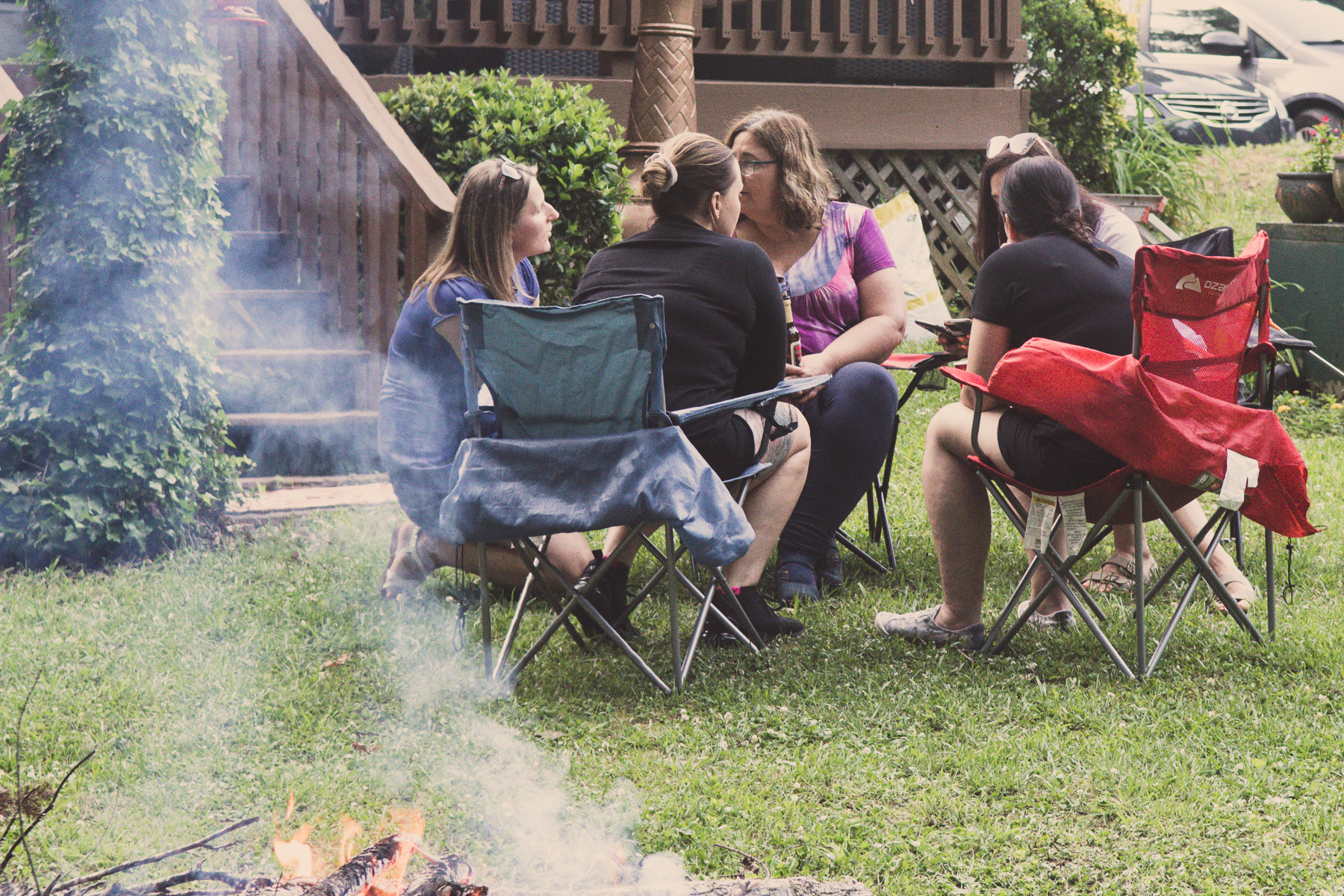
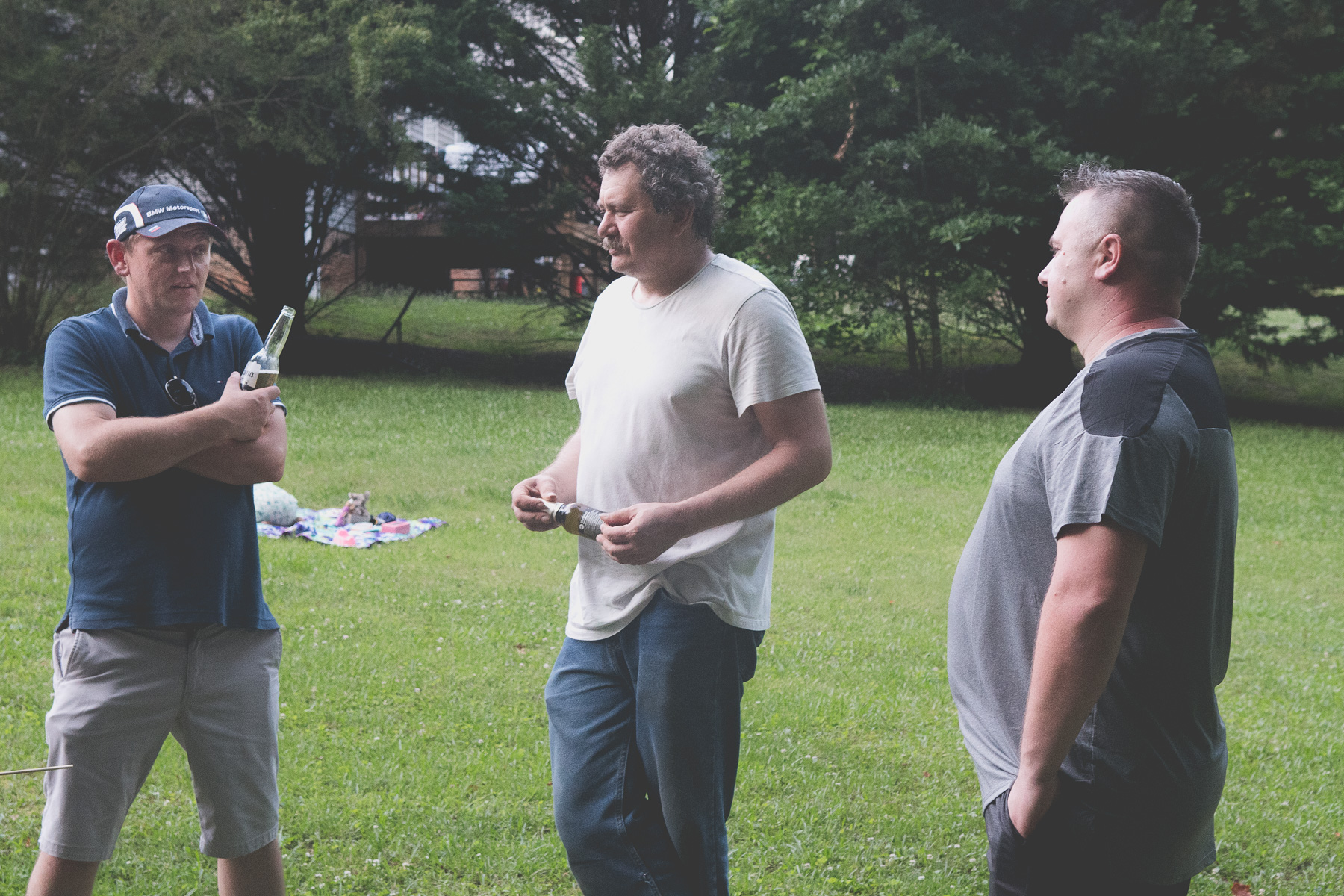
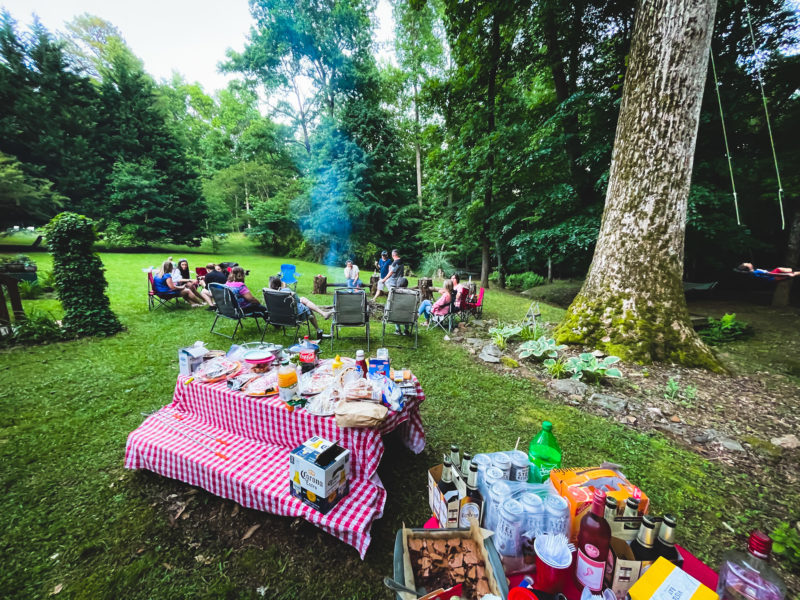
Yesterday was Easter: it was time for a party. What’s a better way to celebrate anything than to be with family and friends?

Naturally, there’s a lot of preparation before hand. My job (other than smoking the tenderloin): deviled eggs. I’ll admit: it was the first time I’d made them, and I was an utter disaster when it came to peeling eggs.

DSC_4931

Still, they turned out well.

DSC_4943

K made at least a million sauces to go with the multitude of different eggs, meats, and veggies.

DSC_4946

First to arrive were Nana and Papa — always a good and helpful thing. It keeps L busy and out from under foot.

DSC_4947

By the time all the guests arrived, there was a tremendous amount of food. After every such party, I reaffirm my conviction that there should be a simple rule with parties: when you leave, take with you what remains of what you brought.

DSC_4952

It wasn’t as if there weren’t enough people to eat it all. Guests in the kitchen;

DSC_4960

guests out on the deck.

DSC_4962

After all the food and libation, it’s a shame we all have to go to work tomorrow: things were cut entirely too short.

Looking for a Spiritual Home

Small by designatednaphour at Flickr

Small church by designatednaphour at Flickr

Obama is looking for a church in Washington. If he were Catholic or Eastern Orthodox, it might be a little easier. As it is, every church in town is vying for presidential membership.

But this is not a Jones-move-to-Knoxville type of search. There’s more at stake here: the irony is that what’s at stake is political, not religious.

Mr. Obama’s search for a church home has touched off a frenzied competition among ministers of various colors and creeds who are wooing the first family. The president, in turn, has sent emissaries to observe worship services, interview congregants and scrutinize pastors. (His aides even searched YouTube to vet one local minister.) [...]

Apparently, Obama is eager to avoid another Wright, and I suppose he’s wise to do so. No one wants to be explaining the racial comments of his pastor while trying to pass an enormous budget, working to get banks lending, or deciding which CEO to fire next — all the traditional jobs of a president.

There are many things to consider: the racial and economic demographics of the church are among the most important, according to some.

But the president’s spiritual quest has also revived the awkward questions that often simmer in a city where blacks and whites, rich and poor still live in largely separate worlds: Will the nation’s first black president join a predominantly black church or a predominantly white one? Will he pray in a wealthy community or in a neighborhood that is less prosperous?

“He is anxious to bridge those divides,” said Terry Lynch, director of the Downtown Cluster of Congregations here. “But it’s a difficult process. Wherever he goes to church is going to be a public issue.”

Maybe being a non-believer is the best option. It wouldn’t have nearly the political baggage.

Oh, on second thought…

Via Washington Churches Eye a Prize, the Obamas – NYTimes.com.